
Guides
48 Hours on Palm Jumeirah
Two days on the island, planned around heat, light and the awkward geography of a place shaped like a tree. Where to begin, when to move, and what a weekend here is actually for.
By The Editorial Team
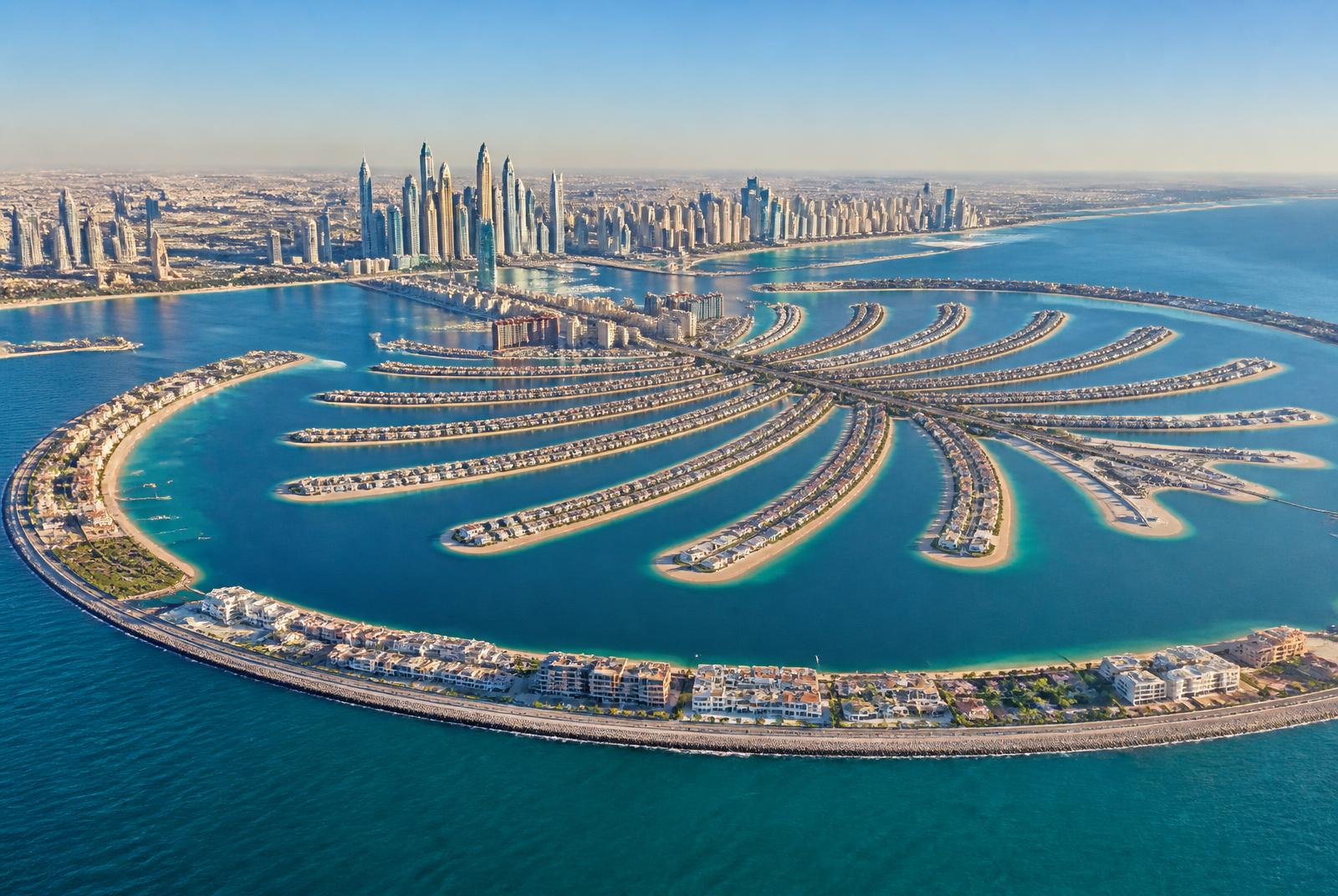
AI-generated image for illustrative purposes.
Why the Palm changes how you plan a weekend
Most Dubai itineraries are written as though the city were a single grid: a morning at the tower, an afternoon in the old town, dinner somewhere with a view. Palm Jumeirah does not cooperate with that model. It is a reclaimed island developed by Nakheel, connected to the mainland by a single road corridor and a monorail, and its internal distances are longer than the map suggests. A weekend here is not a base from which to see Dubai. It is a destination in its own right, and the visitors who enjoy it most are the ones who accept that early.
The compensation is a kind of stillness that the mainland resorts cannot offer. Because the island faces back towards the coast, much of it looks at the skyline rather than sitting inside it. The city becomes scenery. That reversal — Dubai as a distant silhouette across water rather than a set of buildings you are standing beneath — is the single strongest argument for staying here, and it shapes everything below.
What follows is a two-day plan that works in either direction: it assumes a Friday afternoon arrival and a Sunday departure, but the structure holds for any two consecutive days. Where a venue's hours, pricing or operating status could reasonably have changed, we have said so rather than pretending otherwise. Confirm the details that matter to you before you commit an afternoon to them.
The geography of the Palm, and why it decides your weekend
The island has three parts, and understanding them is worth more than any restaurant recommendation. The trunk is the stem: apartment towers, the monorail spine, supermarkets, clinics, the everyday infrastructure of a place where people actually live. The fronds are the residential branches — private villas, almost no public access, and a handful of hotels at the frond tips. The crescent is the breakwater curving around the outside, and it holds most of the large resorts.
Location decides three things. First, beach orientation: crescent properties on the outer arc look back across the water at the fronds and the mainland skyline, which is why sunset behaves differently depending on which side of the arc you are on. Second, travel time: moving from one horn of the crescent to the other is a genuine journey, not a stroll, because the road follows the curve. Third, the character of your evenings — the trunk has neighbourhood restaurants and a mall; the crescent has resort ecosystems.
The practical consequence: pick a base and defend it. Two days is not enough time to sample the whole island, and a weekend spent shuttling between the horns of the crescent is a weekend spent in a car.
Day one, morning: arrive slowly, orient deliberately
Resist the temptation to book a morning activity on arrival day. Dubai's climate does most of the scheduling for you: the useful outdoor hours in the warmer months are early and late, and the middle of the day belongs to shade and water. If you land in the morning, use the first hours to establish where you are rather than to achieve anything.
The most efficient orientation is the Palm Jumeirah Boardwalk, the public promenade running along the outer crescent, which Visit Dubai lists among the island's open-access spaces. Walk a short section of it rather than attempting the whole thing. You will see the geometry of the island, the scale of the resorts, and the mainland skyline in one sweep — the mental map that makes the rest of the weekend easier to plan.
If you are travelling with children, invert this. Get them into water immediately and do the orientation walk at dusk instead, when the temperature is forgiving and the skyline is lit.
Day one, lunch: eat where you are staying, once
Palm dining divides cleanly. Resort restaurants on the crescent are convenient, generally expensive, and often genuinely good, because the large properties here compete on food in a way that resort hotels elsewhere do not. Trunk restaurants and the venues around Palm West Beach on the western side of the trunk are more casual, more local in feel, and better value.
For a first lunch, stay put. You have not yet worked out how long anything takes, and a taxi ride to a beach club you have not seen is the kind of decision that eats an afternoon. Use the day to learn the island's rhythm; spend the second day's meals somewhere you have chosen deliberately.
One structural note worth knowing before you plan any meal: alcohol service in Dubai is licensed, and licensed venues are concentrated in hotels and specific licensed outlets under Dubai's Department of Economy and Tourism framework. That is not a restriction most visitors ever notice on the Palm, because the resorts are licensed — but it explains why hotel restaurants dominate the island's evening scene.
Day one, afternoon: choose water, spa or nothing
The afternoon is where traveller types diverge sharply, and the honest advice is to pick one lane. Families should commit to the water park or the resort pool complex and stay there; the crescent's larger resorts are designed around exactly this and moving mid-afternoon wastes the best of it.
Couples are often better served by the spa. The Palm's wellness offer is unusually deep for a single island — Anantara's spa on the eastern crescent and the Guerlain spa at One&Only The Palm are two of the better-known hotel spas here — and a late-afternoon treatment slot converts the least usable hours of the day into the most restorative ones. Book ahead: hotel spas in Dubai run near capacity at weekends, and walk-in availability is unreliable.
Travellers who came to do nothing should do nothing, and do it on a lounger facing the mainland. This is not a filler recommendation. The particular pleasure of the Palm is watching the city from outside it, and the hours between three and six are when that view is at its best.
Day one, sunset: get height or get water
Sunset on the Palm has two good answers. The first is elevation: The View at The Palm, the observation deck on the trunk, is purpose-built for the one thing photographs of the island never quite manage, which is showing you the shape of it. Tickets and timed entry apply, and sunset slots are the ones that sell out — book in advance rather than arriving hopefully.
The second answer is sea level on the western side. Palm West Beach, the public beachfront strip on the trunk's western edge, faces the open Gulf and takes the sun directly. It is busier, younger and more social than the crescent beaches, and it is the closest thing the island has to a promenade evening.
Whichever you choose, allow more travel time than seems reasonable. The single road spine means the island funnels, and it funnels hardest exactly when everybody is heading somewhere for sunset.
Day one, dinner: inside the ecosystem or outside it
This is the decision that defines the evening. Staying inside the resort ecosystem means a short walk, a licensed venue, a predictable standard and — at the larger properties — a genuinely serious restaurant roster. Atlantis The Royal and Atlantis, The Palm both operate multi-venue dining programmes with international chef partnerships, and One&Only The Palm has long positioned its main restaurant as a destination in its own right. Concepts and chef affiliations in Dubai change more often than in most cities, so check the current line-up on the hotel's own site rather than relying on a list published a year ago.
Leaving the ecosystem means the trunk: neighbourhood restaurants, longer hours, lower prices, and the sense of being in a place where people live rather than visit. It costs you a round trip of perhaps twenty to thirty minutes each way depending on where on the crescent you started and how the road is moving.
Our editorial view: do the resort restaurant on the first night, when you are tired and the logistics matter, and go out on the second, when you know the island.
Day two, morning: three different weekends
Couples: take the boardwalk early, before the heat and before the crowds, and have breakfast late. The outer crescent in the first hour of light is the island at its most convincing, and it is the one time of day when the resorts feel like coastline rather than infrastructure.
Families: go straight to the water park at opening. Aquaventure at Atlantis is the island's largest single attraction and the queues compound through the morning; arriving at opening is worth roughly an hour of afternoon patience.
Travellers prioritising rest: do not leave the property. The strongest argument for a Palm hotel is that a second morning spent entirely on its beach is not a wasted morning. If you want one small excursion, make it the aquarium at Atlantis, which is indoors, air-conditioned and does not require a full day.
Day two, late morning and afternoon: the island's set pieces
The Palm has three attractions that justify leaving a hotel: the water park, the aquarium and the observation deck. All three are ticketed, all three publish current pricing and hours on their own sites, and all three are considerably more pleasant booked in advance. Between them they will absorb anything from two hours to a full day, so choose according to how much of the weekend you want to spend indoors.
Palm West Beach is the alternative for anyone who has had enough of ticketed experiences. It is a public beachfront with a run of independent cafés and beach clubs behind it, and it works as a half-day: swim, eat, walk, repeat. Minimum spends apply at many of the club venues rather than entry fees, and the thresholds move with season and day of week — ask when you reserve.
If the temperature is punishing, the honest answer is the mall on the trunk, which is air-conditioned, connected to the monorail and unremarkable in the way that a place to spend a hot hour should be.
Day two, evening: end the weekend facing the right way
A final evening should do one thing well. The version we would plan: an early swim, a shower, and a table booked for the beginning of sunset rather than the end of it, on the eastern side of the island where the skyline is the backdrop. The mainland towers light up in stages, and being seated before that begins is the difference between watching it and arriving after it.
The alternative, for anyone flying out the next morning, is to stay entirely within the hotel and treat the evening as decompression: a spa slot, room service, and an early night. Dubai's airports run heavily through the small hours, and a 3am departure is a genuine argument against a late dinner across the island.
What we would avoid is the mainland dash — booking a restaurant in DIFC or Downtown on the last night. It is a forty-plus minute proposition each way in traffic, and it converts your final Palm evening into a commute.
Where to stay, and who each property is for
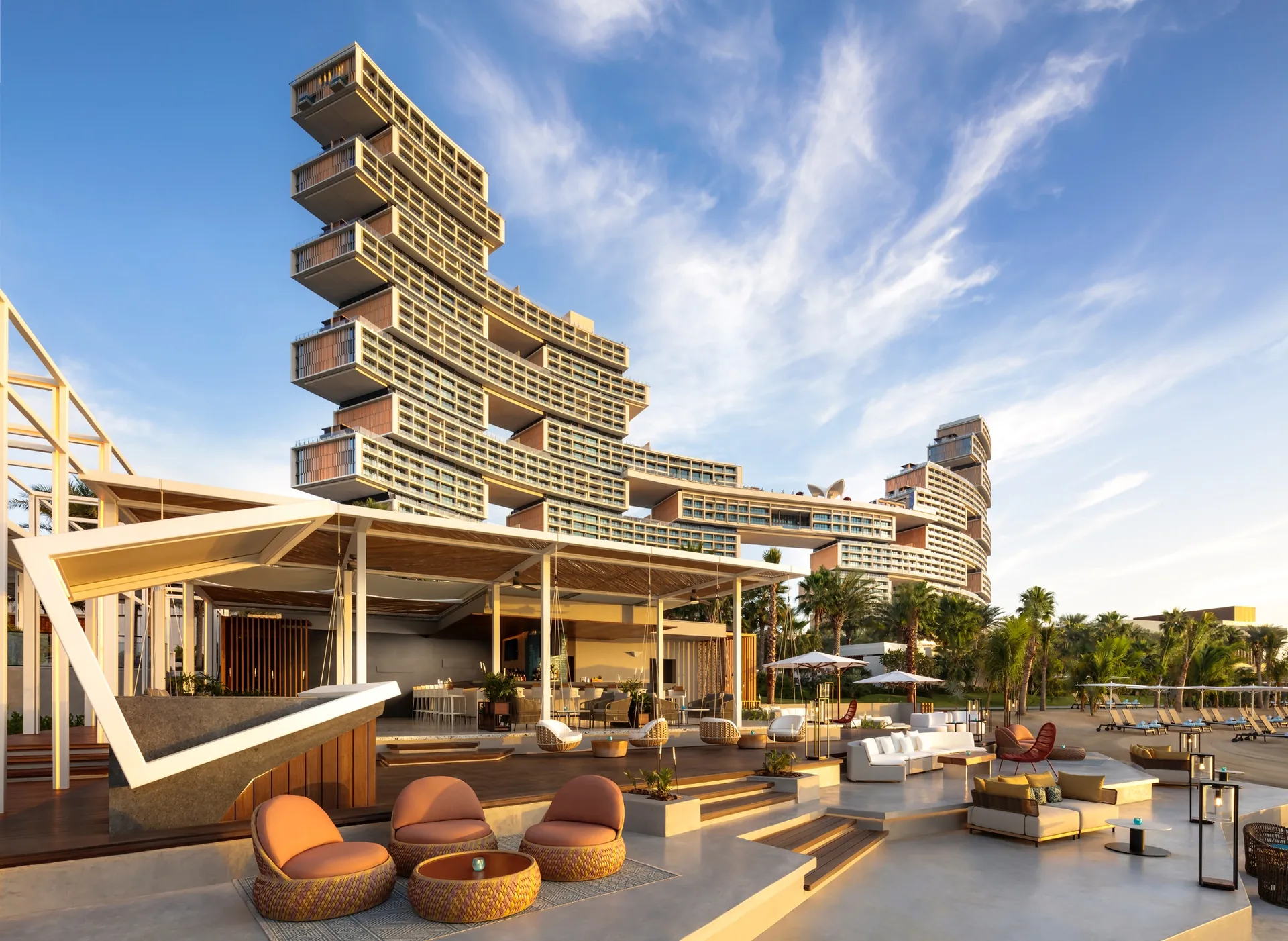
Atlantis The Royal is the island's most architecturally assertive hotel, built as a series of stacked, offset blocks and opened as a separate property from its older neighbour. It is aimed at travellers who want the newest, loudest and most design-forward version of the Palm, with a dining and pool programme scaled accordingly. It is not the choice for anyone whose priority is quiet.
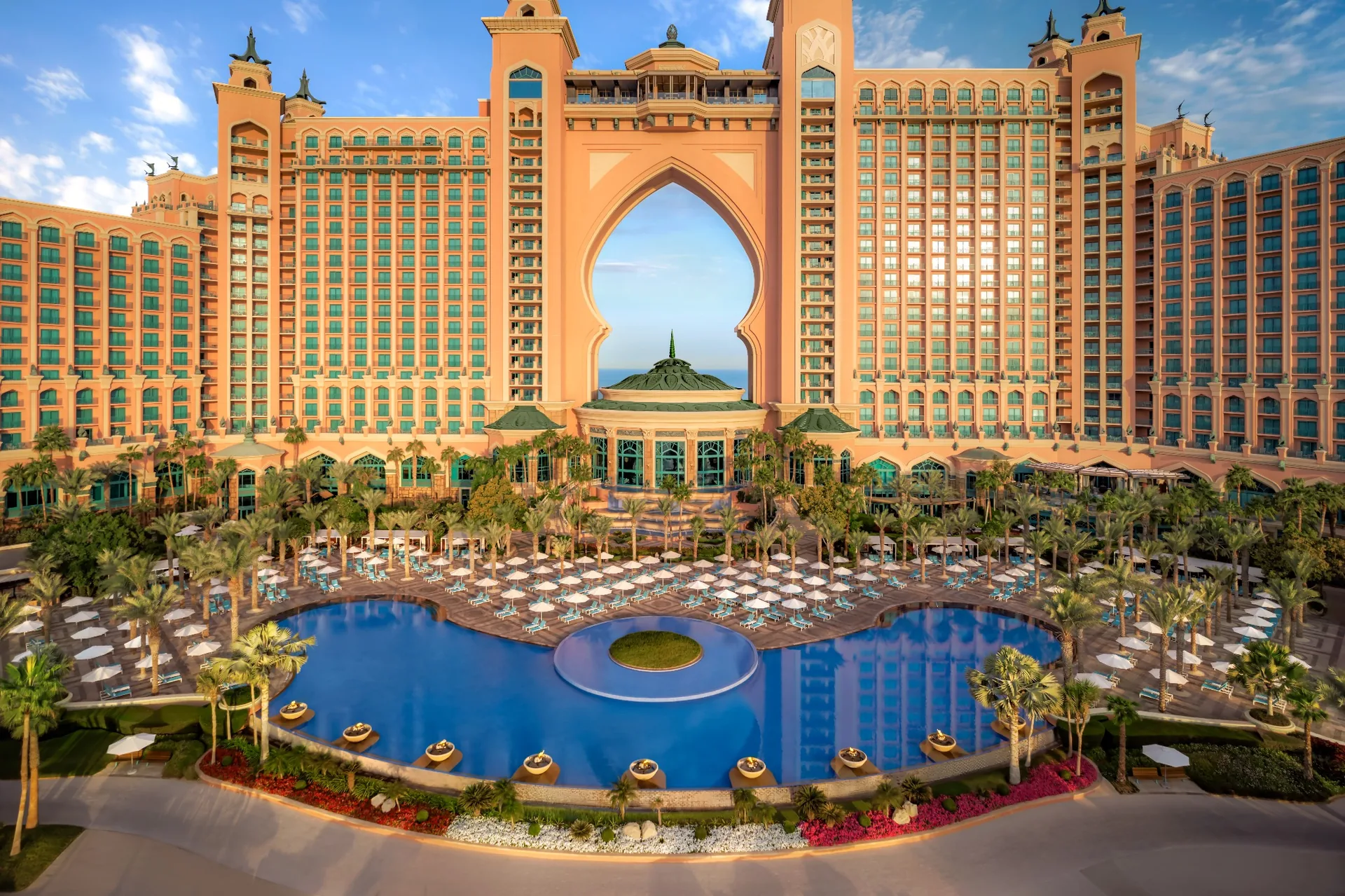
Atlantis, The Palm is the family answer. It is the island's original resort anchor, it holds the water park and aquarium attractions, and its scale means children can be entertained without leaving the property for two days. Couples looking for calm should read that same sentence as a warning.
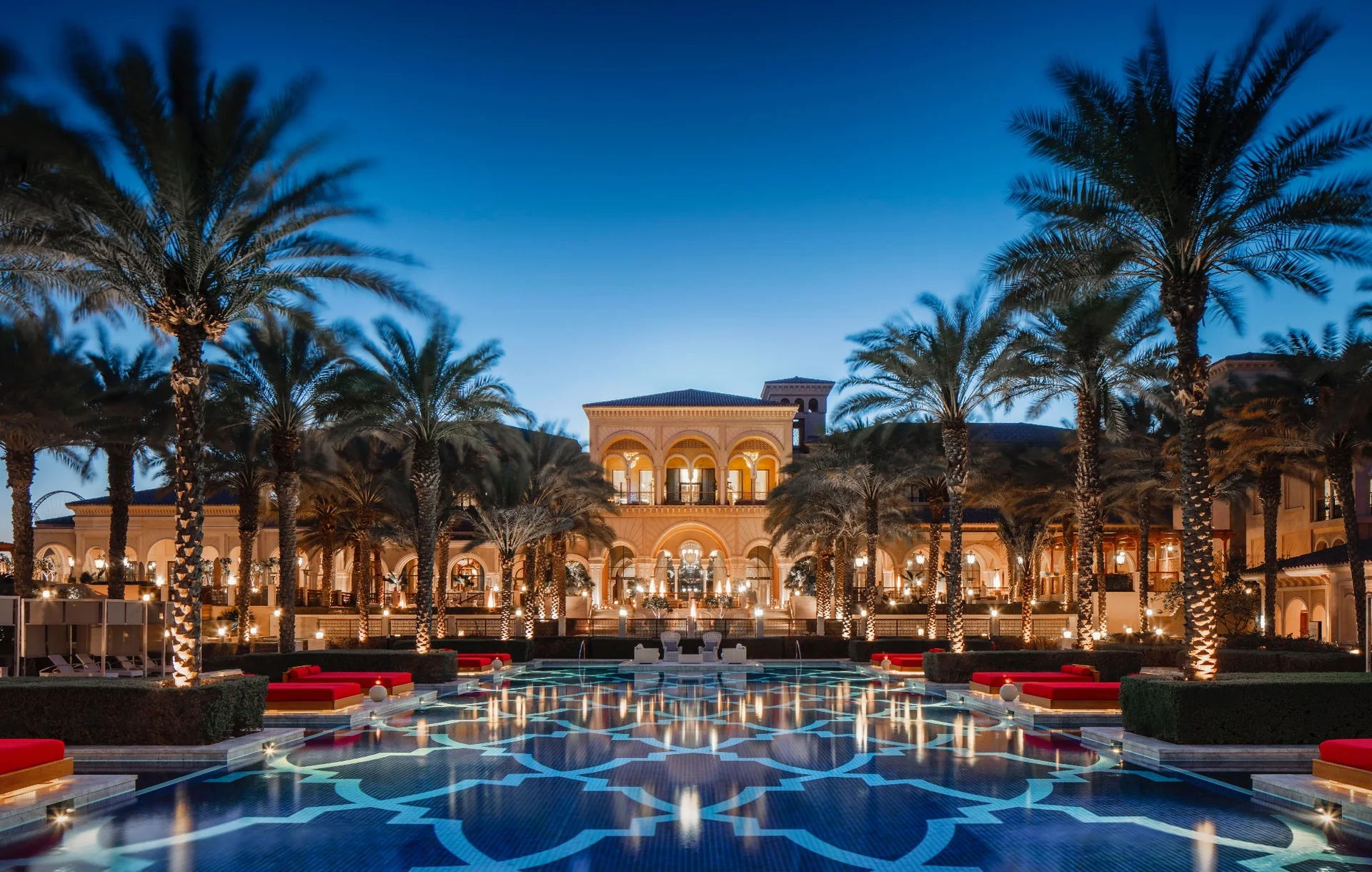
One&Only The Palm sits at the western tip of a frond and takes the opposite position: low-rise, Andalusian-influenced, comparatively small, reached by its own approach and — by design — the least crowded of the major Palm properties. It suits couples, longer stays and travellers for whom privacy outranks facilities.
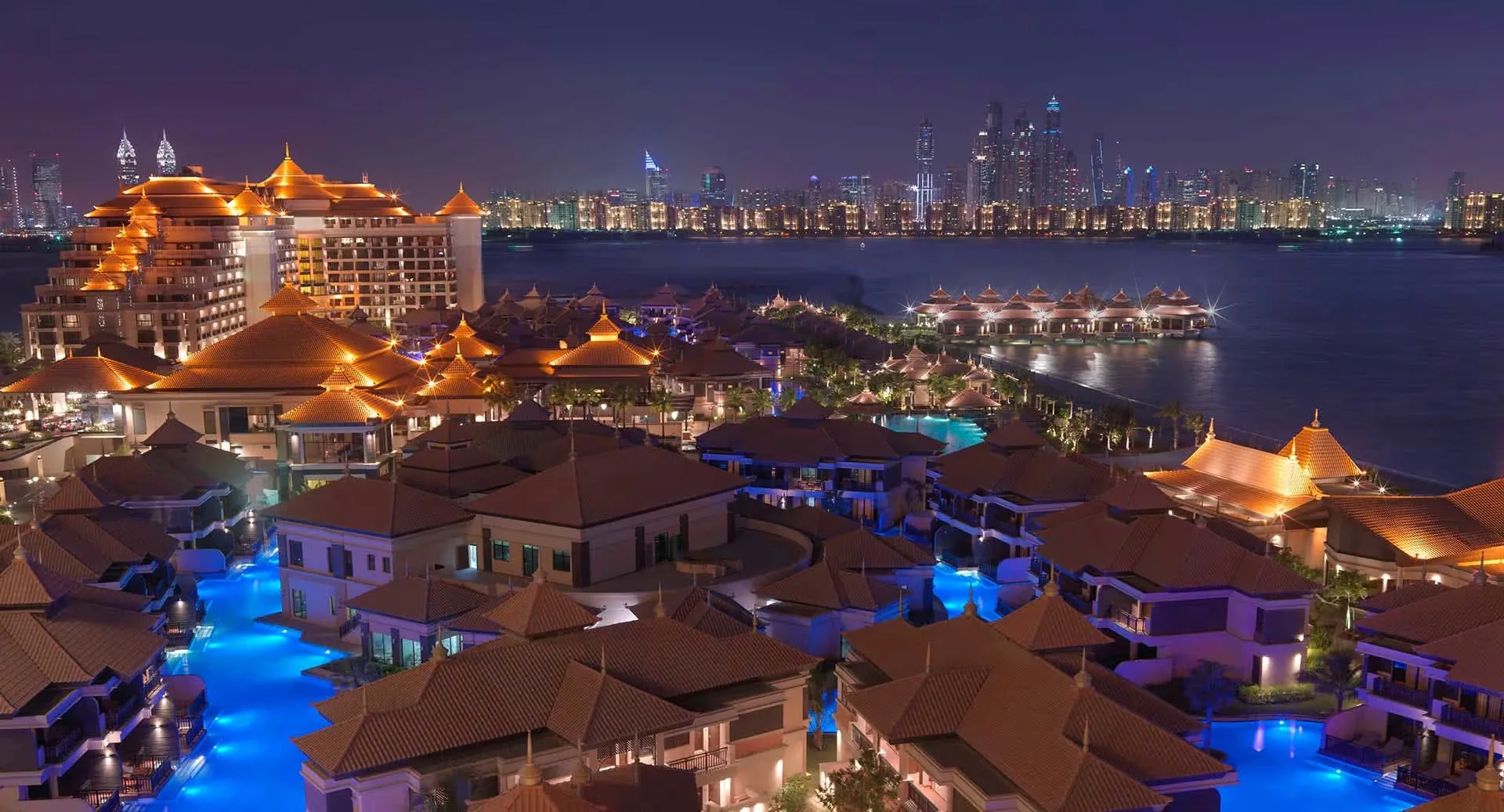
Anantara The Palm Dubai Resort occupies the eastern crescent with an over-water villa format and a Thai-influenced spa programme. It reads as the most resort-like of the four in the traditional sense — lagoon pools, low buildings, a spa at the centre of the offer — and it is the most sensible pick for travellers who want a beach holiday that happens to be in Dubai rather than a Dubai trip that happens to include a beach.
None of these descriptions is a review. They are positioning summaries drawn from each hotel's own published material, and the correct next step is to read the property pages and decide which trade-off you are making.
Getting around
Three options, in descending order of usefulness. Taxis and ride-hailing are the default: plentiful at the resorts, straightforward on the crescent, and the only realistic way to move between distant points on the arc. Hotel shuttles are the second, and worth asking about at check-in rather than assuming — several of the larger properties run scheduled services to the trunk or the mainland.
The Palm Monorail runs along the trunk between the mainland end and the crescent, with intermediate stations serving the mall and the Atlantis end. It is genuinely useful if your day is trunk-shaped and close to useless if it is not. Check current operating hours and station list on the operator's site; the service has changed shape more than once.
Walking works only in defined stretches — the boardwalk, Palm West Beach, the immediate area around your hotel. The island was not designed for pedestrians crossing between zones, and attempting it in summer is a mistake rather than an adventure.
When to go
Broadly: the cooler months from roughly November to March are the comfortable ones and the expensive ones, and the summer months are the reverse. Sea and air temperatures both climb steeply through the year, and by midsummer the practical outdoor window narrows to early morning and after dark. None of this is a guarantee for any specific week — the UAE's National Center of Meteorology publishes current forecasts, and that is the only source worth checking close to travel.
Two scheduling notes that matter more than weather. Ramadan shifts the rhythm of the city, including daytime dining and entertainment; Visit Dubai publishes current guidance each year, and travelling during it is entirely workable if you know in advance. And weekend demand — Friday and Saturday — is real on the Palm, affecting beach club minimum spends, restaurant availability and traffic on the single road corridor.
What to book ahead
Four things, in order of how badly it goes if you do not. Spa treatments at weekends, which sell out first. Sunset slots at The View at The Palm, which are timed-entry. Dinner at the destination restaurants inside the major resorts. And water park entry if you are visiting during a school holiday period.
Everything else can be decided on the day. We would specifically not pre-book a beach club before seeing the weather, because a windy day on the western side of the trunk is a different proposition from a still one.
If you have an extra day
The best third day leaves the island. Downtown Dubai is the obvious extension — walkable, dense, and built around the tower and the mall, with metro access that the Palm lacks. It is the right choice for a first-time visitor who has spent two days looking at the skyline from a distance and now wants to stand inside it.
The more interesting extension is inland. The desert resorts inside the Dubai Desert Conservation Reserve are roughly an hour from the coast and offer a genuinely different landscape, wildlife and pace — a single night there alongside a Palm stay is one of the more satisfying two-part itineraries the emirate allows.
The third option, for repeat visitors, is the Jumeirah coast: the older luxury shoreline, closer to the city, with a hotel density and dining scene that the Palm does not match.
The Dubai Hotels Magazine view
Palm Jumeirah suits the traveller who wants a resort holiday with a skyline attached, and who is content to see Dubai mostly from across the water. It is an excellent choice for families, for couples prioritising beach and spa time, and for anyone whose trip is three or four nights of rest rather than a city itinerary.
It is the wrong choice for the visitor who wants to walk out of the lobby into a city, who intends to eat somewhere different every night, or who has two days and a long list of mainland sights. Those travellers should stay Downtown and visit the Palm for an afternoon.
Two days here, planned as above, is enough to understand the island completely. That is not a criticism. It is the reason a weekend works so well.
Sources
Factual detail in this article was checked against first-party and authoritative sources on . Times, prices, opening hours and menus change — confirm current details with the provider before travelling.
- https://www.nakheel.com/en/developments/nakheel-collections/palmjumeirah
- https://www.visitdubai.com/en/places-to-visit/palm-jumeirah-boardwalk
- https://www.theviewpalm.ae/en/about-the-view
- https://www.palmmonorail.com/stations
- https://www.westbeach.ae/en/west-beach
- https://www.atlantis.com/dubai
- https://www.oneandonlyresorts.com/the-palm
- https://www.anantara.com/en/palm-dubai
- https://www.visitdubai.com/en/articles/how-to-experience-ramadan-in-dubai
- https://www.ncm.gov.ae/
About the author
The Editorial Team — Reporting, reviews and guides produced by the Dubai Hotels Magazine editorial team.
Our authorsHotels in this article
Where to stay
Palm JumeirahLuxury
Atlantis The Royal
Kerzner's stacked-block landmark on the Palm crescent, built around a chef-driven restaurant collection and a resort programme of its own.
- Beach
- Fine Dining
- Pool
Palm JumeirahResort
Atlantis, The Palm
The original Palm Jumeirah landmark: a kilometre of private beach, Aquaventure Waterpark and The Lost Chambers Aquarium on one estate.
- Beach
- Family
- Pool
Palm JumeirahLuxury
One&Only The Palm
Low-rise Andalusian-inflected rooms, suites and villas on a quiet stretch of the Palm, with two-Michelin-starred STAY by Yannick Alléno.
- Beach
- Fine Dining
- Spa
Palm JumeirahResort
Anantara The Palm Dubai Resort
400 metres of private shoreline, three 24-hour swimming lagoons with direct room access, and the first over-water villas built in the UAE.
- Beach
- Pool
- Spa
Destinations
Explore the destinations
Read next
More from the magazine
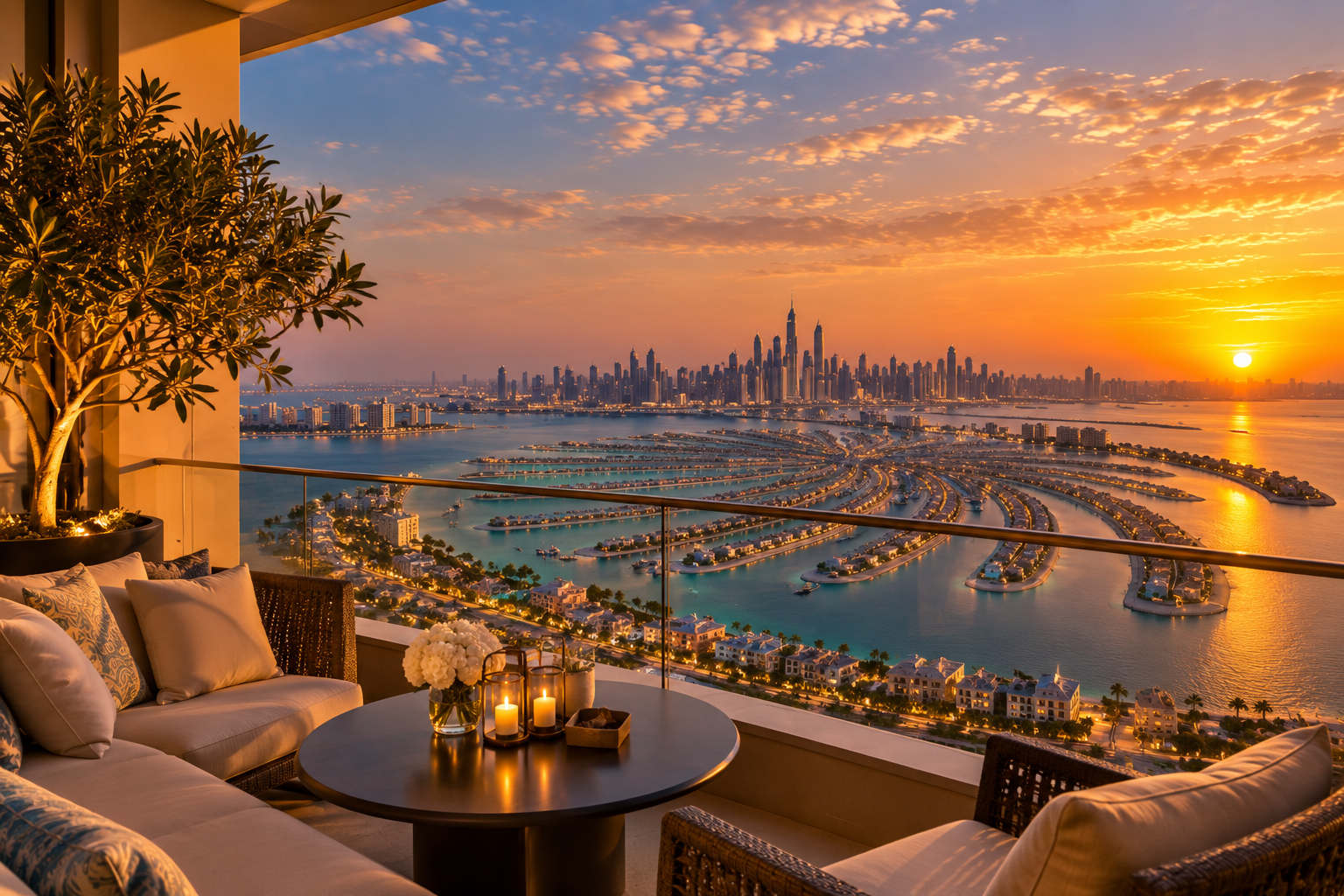
AI-generated image for illustrative purposes.
GuidesWhere To Stay
A Guide to Staying on Palm Jumeirah
Trunk, frond or crescent — the three answers to the same question, and why the part of the island you book matters more than the brand above the door.
By The Editorial Team
ExperienceBeach Clubs
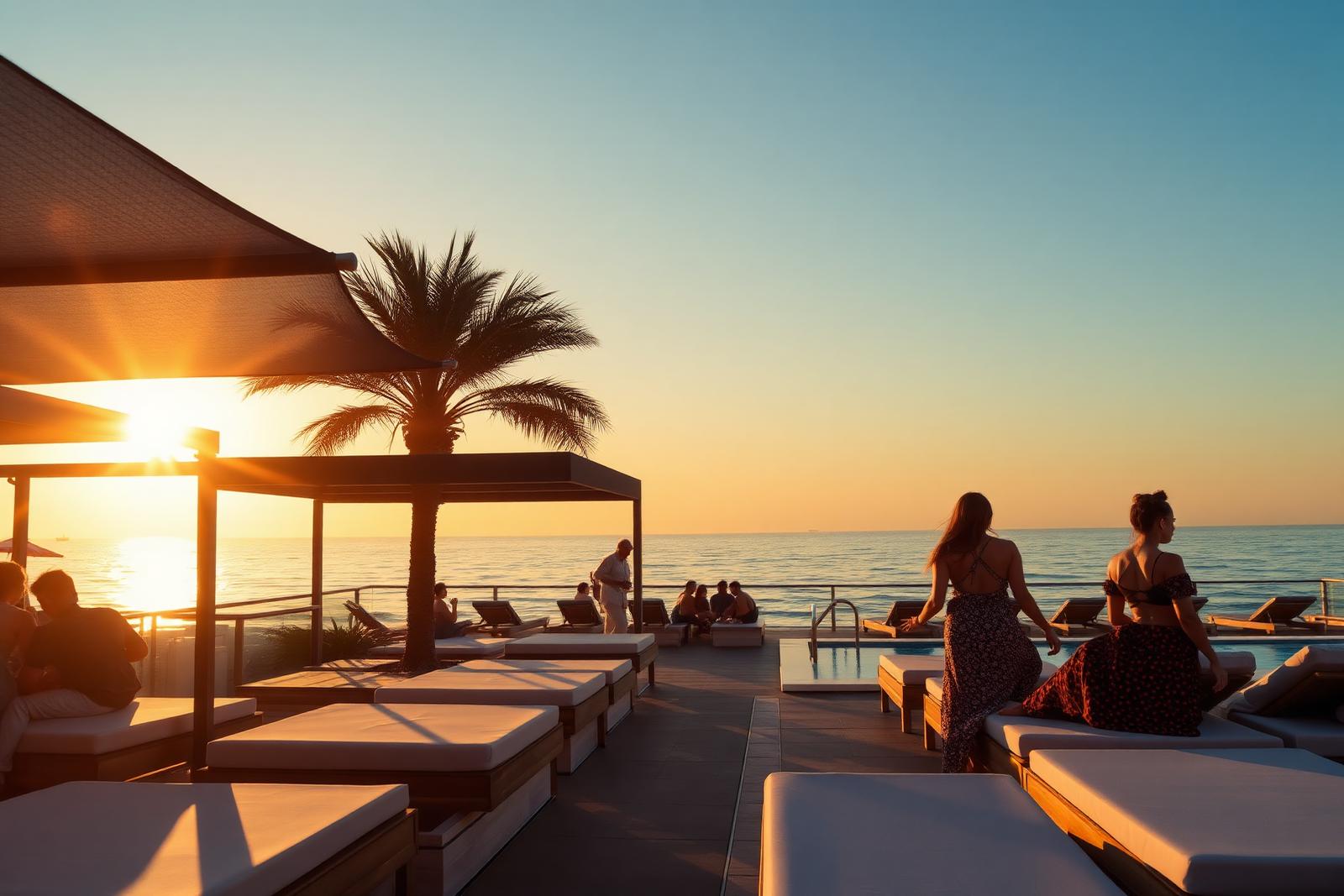
Dubai Beach Clubs: What Travellers Should Know
Minimum spends, sun angles, wind, season and the family policies nobody publishes. A practical guide to a category that ranges from excellent to expensively disappointing.
By The Editorial Team
ExperienceWellness
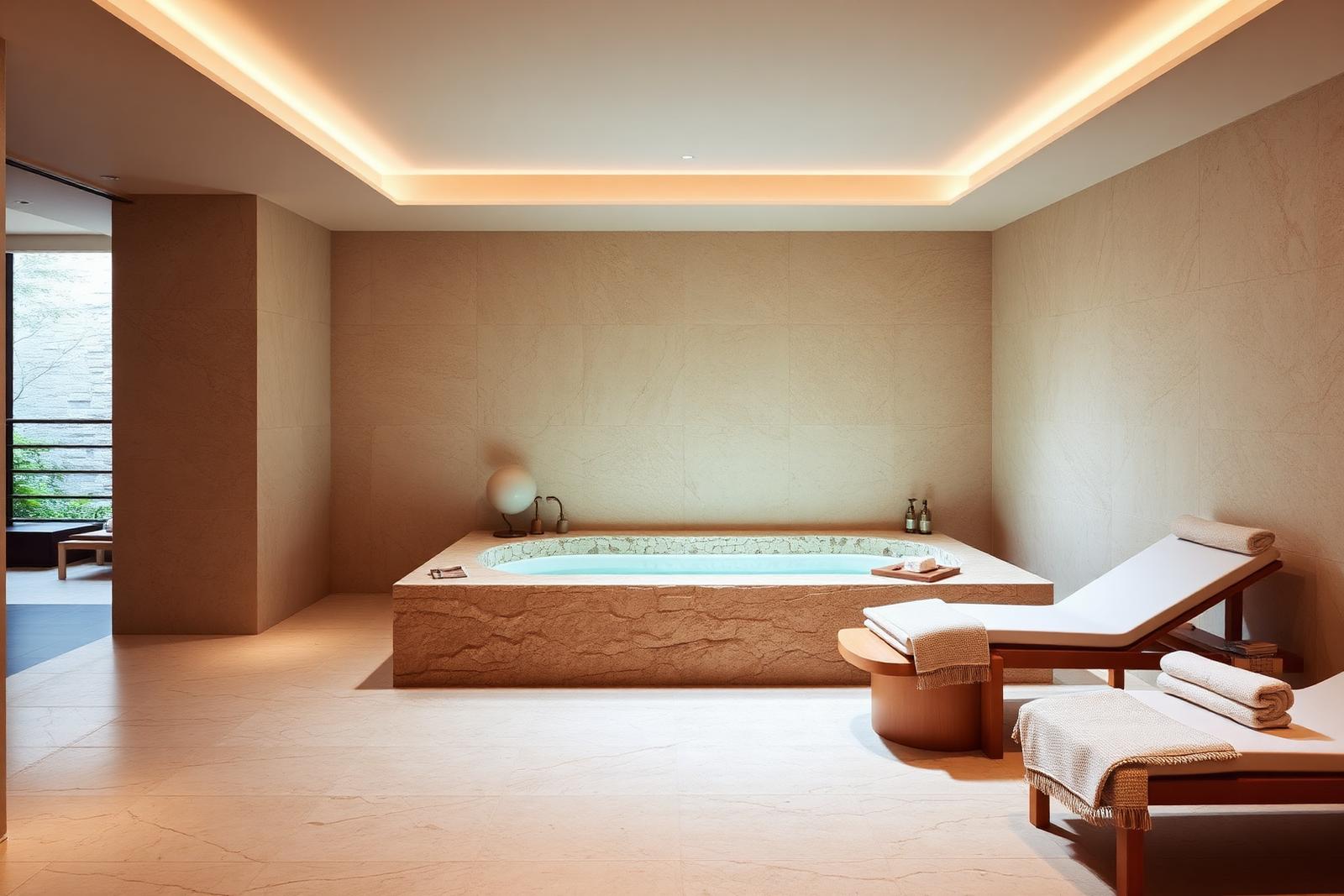
A Guide to Dubai Hotel Spas and Wellness
The spa menu is no longer the whole story. How wellness moved from the hotel basement to the centre of the building, and what to book depending on what you actually need.
By The Editorial Team