
Features
Dubai's New Generation of Luxury Hotels
A short, intense opening cycle changed what a luxury hotel in this city is expected to be. Not bigger — different: wellness as architecture, dining as identity, and privacy as the scarcest amenity of all.
By The Editorial Team
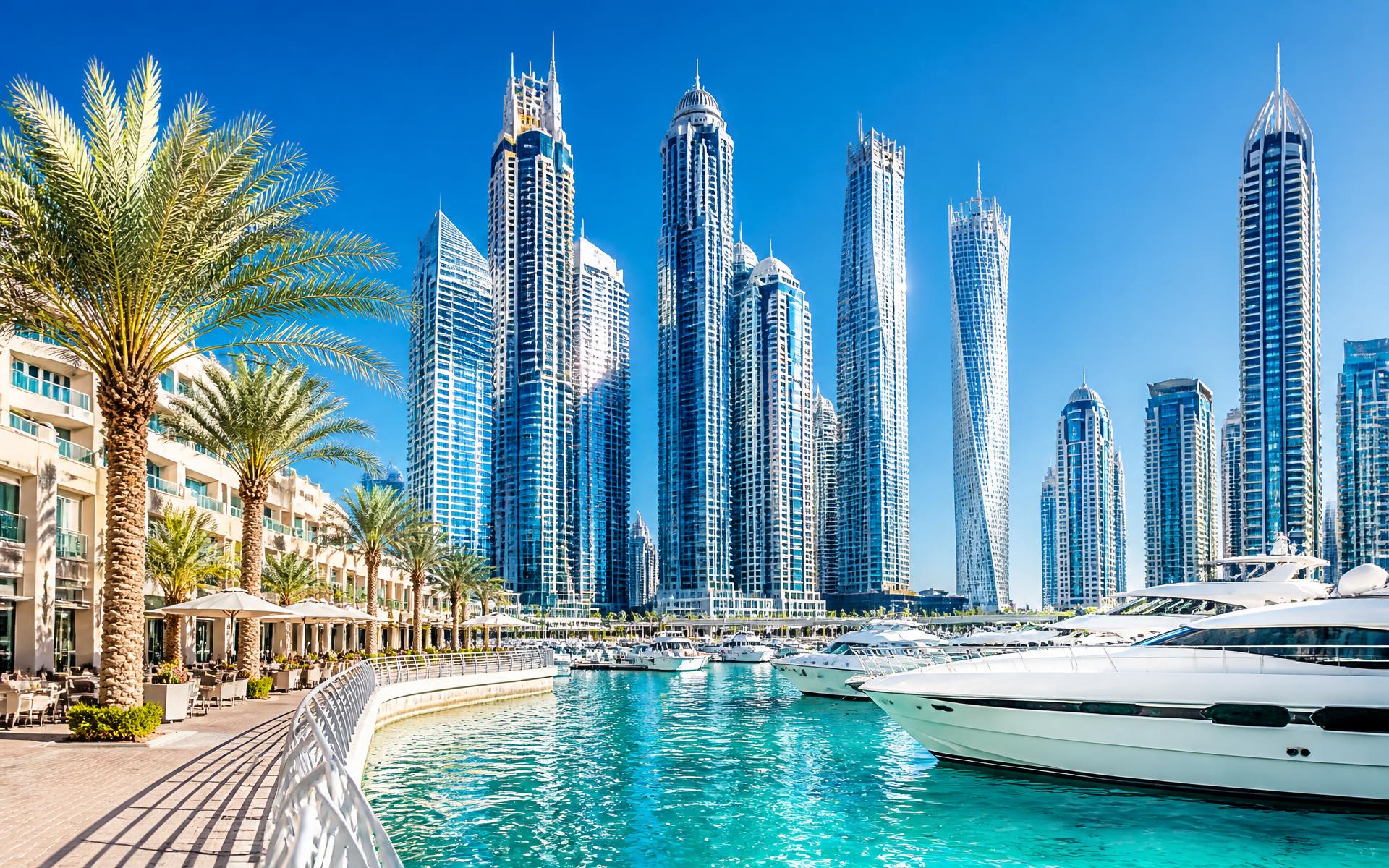
AI-generated image for illustrative purposes.
The end of the arms race
For most of the two decades after Burj Al Arab, Dubai's luxury hotels competed on a single axis: scale. More rooms, more restaurants, taller atria, larger pools, longer beaches. It was an effective strategy in a market that needed to announce itself, and it produced buildings that are still the city's most recognisable exports.
The opening cycle that ran from 2023 into 2025 did something different. The properties that arrived in that window were not simply larger versions of what came before. They were arguments about what luxury in this city should now consist of — and, read together, they describe a market that has stopped trying to be impressive and started trying to be specific.
This piece looks at five of them: Atlantis The Royal, The Lana, One&Only One Za'abeel, SIRO One Za'abeel and Jumeirah Marsa Al Arab. None of these descriptions is a review; Dubai Hotels Magazine has not stayed at or tested these hotels. What follows is analysis of positioning, drawn from each operator's own published material.
Atlantis The Royal: spectacle, but structured
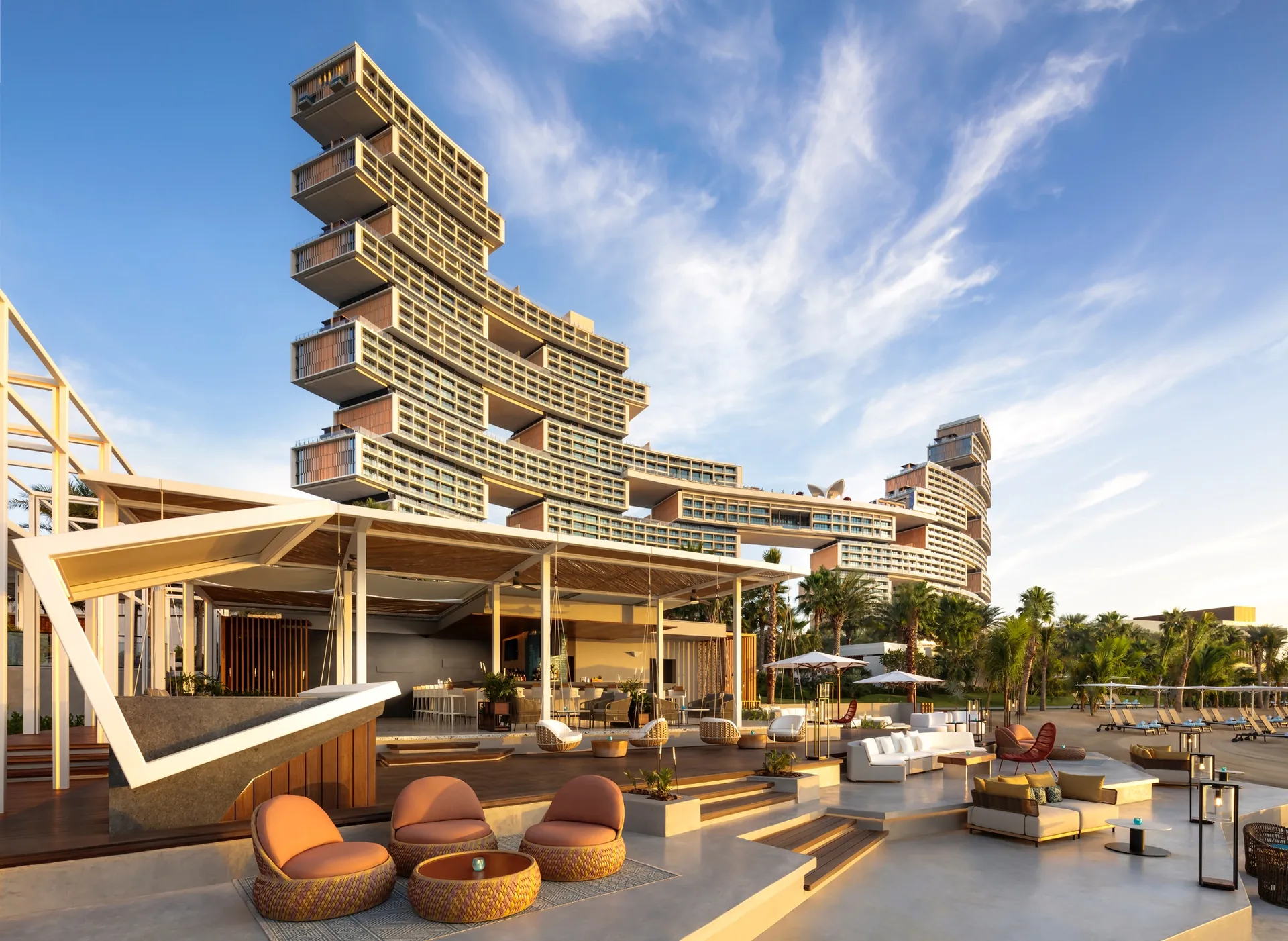
The easiest mistake is to read Atlantis The Royal as more of the same — another very large resort on Palm Jumeirah from the group that built the first one. The building itself argues otherwise. Rather than the symmetrical arch of its neighbour, it is composed of stacked, offset volumes with voids cut through them, a form that reads as sculpture from a distance and produces a genuinely unusual set of interior spaces up close.
Its second argument is dining. The property opened with a roster of restaurants from internationally known chefs, positioning food as a primary reason to book rather than a facility to be provided. That has become the default posture for new Dubai luxury openings, and this hotel is where it hardened into an expectation.
What it did not change is the market it serves. This remains a resort for travellers who want the loudest, most photographed version of Dubai. The difference is that the spectacle is now designed rather than merely large.
The Lana: the arrival of the quiet brand
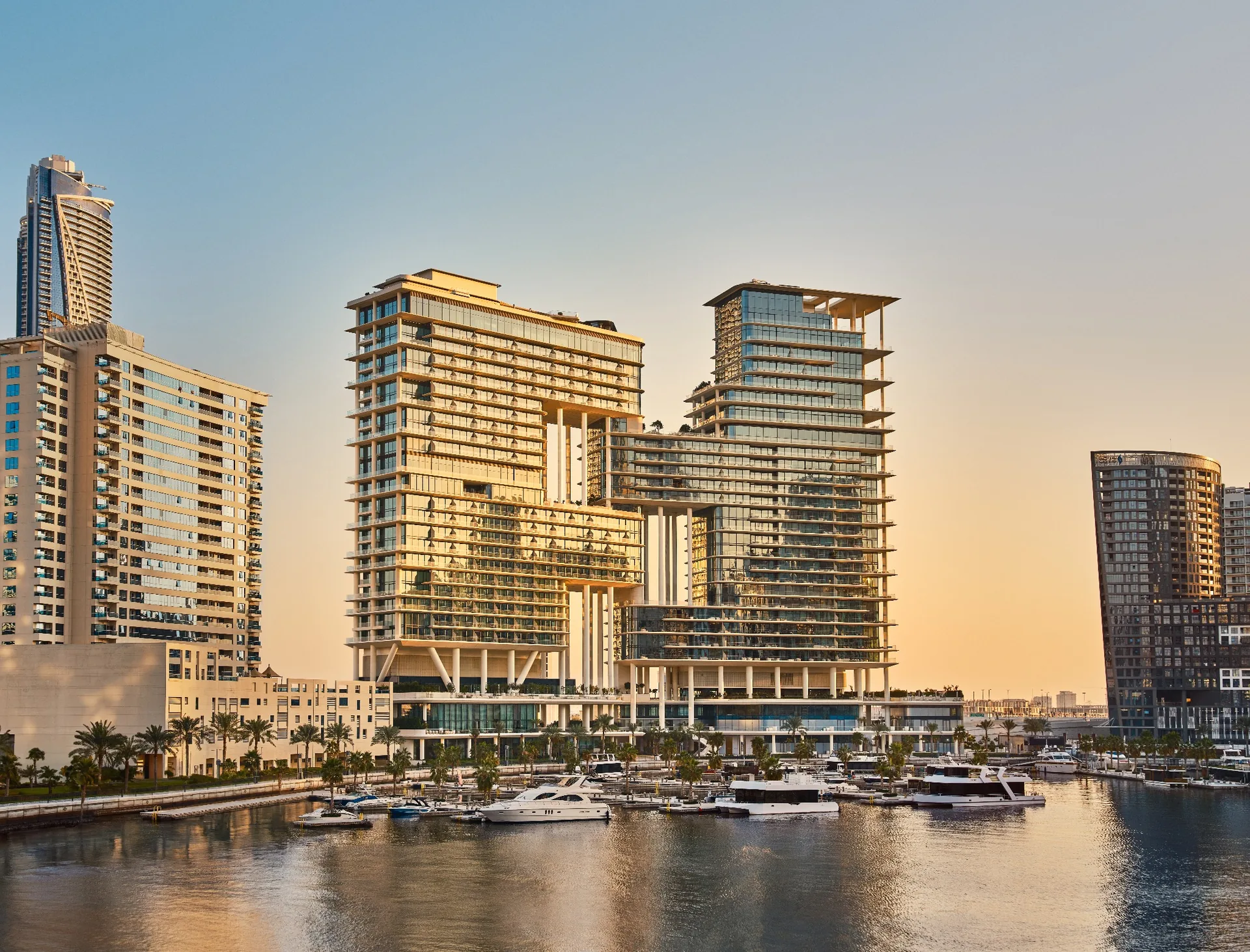
The Lana, Dorchester Collection's first hotel in the Middle East, is small by Dubai standards and located not on a beach but on the water in Business Bay. Almost everything about that sentence would have been a strategic error ten years earlier.
It signals a real change: the arrival of European hotel brands whose value rests on discretion, service depth and a limited number of keys rather than on facilities. A guest choosing this hotel is not choosing a water park, a private beach or a thousand-seat ballroom. They are choosing the absence of them.
That the group chose Dubai for its regional debut is itself the story. It implies a resident and repeat-visitor market large enough to sustain a hotel that makes no attempt at the tourist spectacle — a market that did not exist here in the same form a decade ago.
One&Only One Za'abeel: the urban resort, properly attempted
The urban resort has been promised in Dubai many times and delivered rarely. One&Only One Za'abeel is the most serious attempt: a resort brand best known for low-rise, beachfront, privacy-led properties operating inside a vertical mixed-use development in the middle of the city.
The site's defining feature is The Link, the horizontal sky concourse suspended between the development's two towers and recognised by Guinness World Records as the world's longest cantilevered building. It carries dining venues and a rooftop pool at altitude, and it turns what would elsewhere be a corridor between two buildings into the property's principal public space.
The interesting question is whether a resort operator's service model survives translation into a city tower. The bet is that Dubai's luxury traveller increasingly wants resort standards without the transfer to the coast — the same instinct that drives the growth of DIFC and Business Bay as places to stay rather than places to work.
SIRO One Za'abeel: wellness as the building, not the basement
SIRO, launched by Kerzner with its first property in the same Za'abeel development, is the clearest evidence that the wellness conversation in Dubai has moved past the spa menu. The concept is built around structured pillars — fitness, nutrition, sleep, recovery and mindfulness — applied to the guest's whole stay rather than sold as a treatment list.
In practical terms that means programming embedded in the room and the schedule: recovery facilities as a primary amenity, food designed around performance rather than indulgence, sleep treated as a service. Whether that appeals is a matter of temperament. What is not in question is that it targets a guest who would not previously have identified Dubai as a wellness destination.
It also reframes what a hotel gym is. In the previous generation, fitness was a windowless room a guest visited apologetically. Here it is the reason for the booking, which is a substantial change in what the building is for.
Jumeirah Marsa Al Arab: the home team's answer
Jumeirah Marsa Al Arab, which the group announced would welcome guests from April 2025, matters because of who built it. Jumeirah is the operator behind Burj Al Arab — the property that defined the city's luxury image — and its newest flagship is a deliberate statement about where that image goes next.
The positioning leans on a yacht-influenced form and a marina setting rather than on a single iconic silhouette. That is a meaningful shift for a group whose previous defining gesture was a building shaped like a sail. Where the older property sells uniqueness of form, the newer one sells a resort ecosystem on the established Jumeirah shoreline.
Read alongside the other four, it completes the picture: even the operator that invented Dubai's landmark hospitality has stopped competing on landmarks.
What the five have in common
First, dining is no longer an amenity. Every property in this cycle opened with restaurants positioned as destinations, and several of them are now booked by residents who have no intention of staying the night. That has quietly turned Dubai's hotels into the city's restaurant infrastructure.
Second, wellness has moved up the building. The spa used to be a basement with a treatment menu; in this generation it is programming, and in one case it is the entire premise.
Third, privacy has become the premium. In a city of very large hotels, the scarce commodity is fewer rooms, longer approaches, smaller lobbies and staff who recognise you — which is precisely what the smaller European entrants are selling.
Fourth, the city itself has become an acceptable setting for a resort. The move inland from the coastline, to Za'abeel and Business Bay, would have been unthinkable when the beach was the only luxury address.
What it means for choosing a hotel
The practical consequence for travellers is that brand no longer predicts experience as reliably as it once did. Two hotels from resort operators can now offer opposite propositions depending on whether they sit on sand or on the twenty-fifth floor. Read the building, not the badge.
It also means that the old shorthand — beach for leisure, city for business — has broken down. A leisure traveller with three nights and an interest in food and wellness may well be better served in Za'abeel or Business Bay than on the coast, which was not true of the previous generation.
Concepts, chef affiliations and facility line-ups in this segment change quickly, sometimes within a season. Anything you are booking around should be confirmed on the hotel's own current pages before you commit.
The dining arms race, and what it cost
The clearest measurable change in this cycle is the number of restaurants per hotel and the seniority of the names attached to them. A flagship opening in Dubai now arrives with a dining portfolio rather than a restaurant, and the portfolio is assembled the way a festival line-up is: a headline chef, a couple of established international imports, a bar with its own identity, and a room aimed squarely at residents.
The strategy works because Dubai's population supports it. Hotels here are not dependent on their own guests to fill a dining room; a well-conceived restaurant will be booked by people who live twenty minutes away and have no interest in the bedrooms. That is what allows the economics of a chef-led kitchen inside a hotel to make sense at all.
The cost is churn. Concepts that would run a decade elsewhere are reconcepted here within a few years, and chef affiliations move. For travellers, the practical consequence is that any restaurant you are planning an evening around should be confirmed on the hotel's own current pages rather than a list published last season.
Service, and the part that is hard to photograph
The less visible change in this generation is staffing ratios. The smaller entrants are competing on a service model — fewer rooms, more staff, recognition rather than process — that the very large resorts structurally cannot match, and which does not appear in any photograph of a lobby.
This is where the market has genuinely matured. A guest paying at the top of the range in Dubai a decade ago was largely buying square metres and a view. The same guest today is increasingly buying anticipation: the correct table without asking, the car ready before the lift arrives, a housekeeping team that has learned a preference by the second morning.
It is also the hardest thing to verify from outside, and the reason we do not rate hotels on service without having stayed. What can be said is that the operators entering this market are the ones whose international reputations rest on it, which is itself a signal about where they think the demand is.
Where the next cycle points
Three directions are visible in what has already opened. Inland, away from the coastline, as Za'abeel and Business Bay demonstrate that a luxury hotel no longer needs sand. Smaller, as European brands prove that a hundred-key hotel can compete with a thousand-key resort at the same rate. And programmed, as wellness moves from facility to itinerary.
What appears to be finished is the era of the single-gesture building — the hotel whose entire proposition is a shape. Nothing in the current cycle attempts one, including from the operator that invented the format.
The Dubai Hotels Magazine view
The most interesting thing about this cycle is not any single hotel. It is that five properties opening within roughly two years managed to be genuinely different from one another — sculptural resort, discreet urban hotel, vertical resort, wellness hotel, marina flagship — in a market that spent twenty years being accused of building the same thing repeatedly.
Dubai's luxury hotels are now specific enough that choosing badly is possible in a way it was not before. That is a sign of maturity, and it makes the choice a more interesting one.
Sources
Factual detail in this article was checked against first-party and authoritative sources on . Times, prices, opening hours and menus change — confirm current details with the provider before travelling.
- https://media.dorchestercollection.com/dorchester-collection-opens-first-hotel-in-the-middle-east
- https://kerzner.press.camronglobal.com/kerzner-international-opens-first-siro-hotel
- https://www.onezaabeel.com/the-link/
- https://www.guinnessworldrecords.com/world-records/617033-longest-cantilevered-building
- https://www.kerznercommunications.com/one-and-only/oneonly-one-zaabeel--now-open-in-dubai/
- https://mediahub.jumeirah.com/jumeirah-marsa-al-arab-set-to-welcome-guests-from-april-2025
- https://www.atlantis.com/atlantis-the-royal
- https://www.sirohotels.com/dubai/one-zaabeel
About the author
The Editorial Team — Reporting, reviews and guides produced by the Dubai Hotels Magazine editorial team.
Our authorsHotels in this article
Where to stay
Palm JumeirahLuxury
Atlantis The Royal
Kerzner's stacked-block landmark on the Palm crescent, built around a chef-driven restaurant collection and a resort programme of its own.
- Beach
- Fine Dining
- Pool
Business BayLuxury
The Lana, Dorchester Collection
Dorchester Collection's first Middle East hotel, on Marasi Drive in Business Bay — waterfront, architecture-led and dining-driven.
- Fine Dining
- Spa
- Pool
Za'abeelLuxury
One&Only One Za'abeel
An all-suite city resort in the One Za'abeel towers, connected by The Link — the cantilevered skybridge over Sheikh Zayed Road.
- Fine Dining
- Spa
- Pool
Za'abeelWellness
SIRO One Za'abeel
Kerzner's fitness-and-recovery brand, built around training, sleep and recovery programming rather than conventional hotel leisure.
- Wellness
- Spa
JumeirahLuxury
Jumeirah Marsa Al Arab
Jumeirah's newest Dubai resort, a ship-form building by Shaun Killa on the water beside Madinat Jumeirah.
- Beach
- Fine Dining
- Spa
Destinations
Explore the destinations
Read next
More from the magazine
FeaturesDesign
Reading Dubai: Twenty-Five Years of Hotel Architecture
A city that built its identity out of hotels. From a sail on an artificial island to a building suspended across a motorway — the chronology, and what each phase was arguing for.
By The Editorial Team
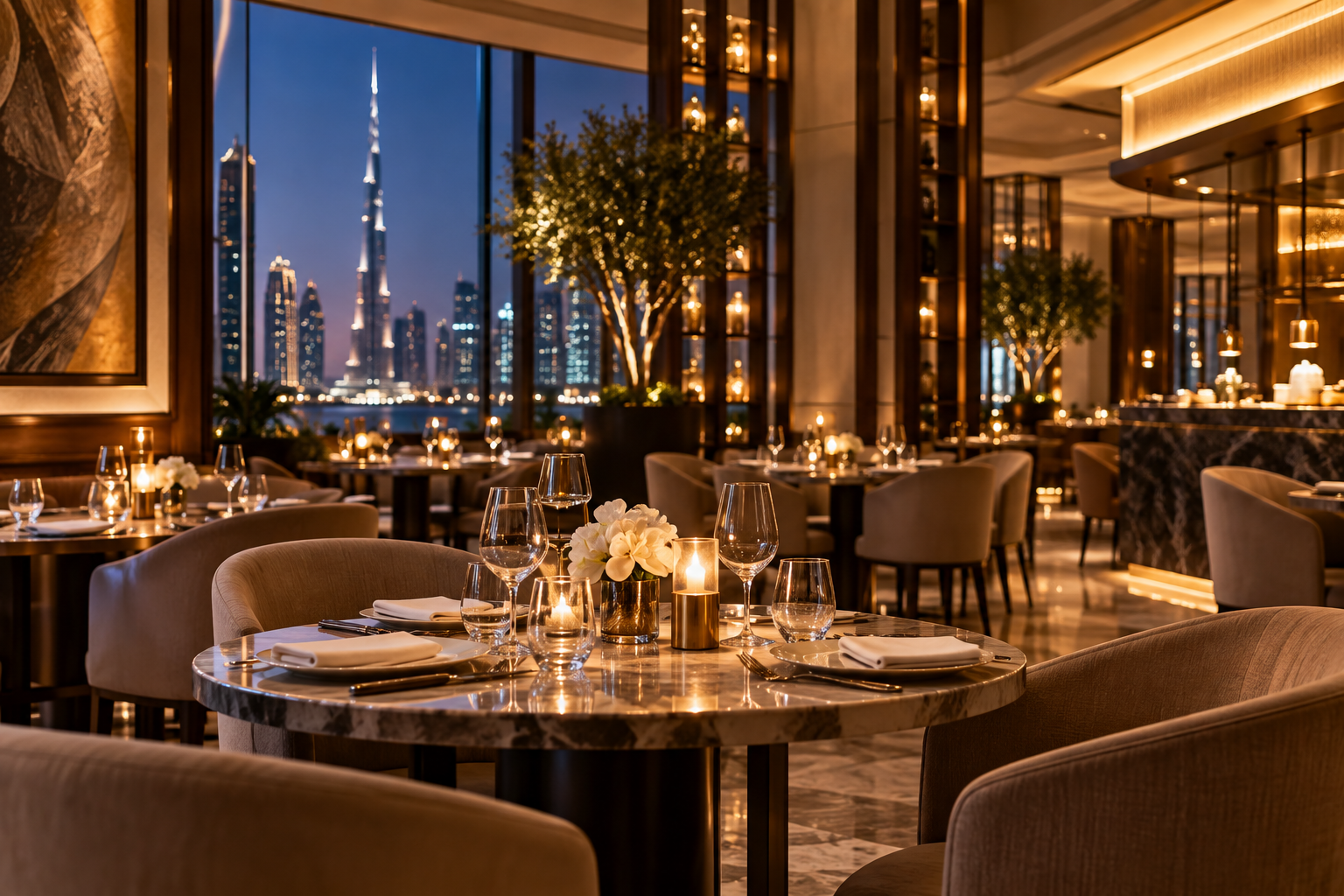
AI-generated image for illustrative purposes.
Eat & DrinkHotel Restaurants
Dubai's Hotel Dining Scene
In most cities, hotel restaurants are where you eat when you have run out of ideas. Here they are the idea. How the city's dining ended up inside its hotels, and how to navigate it.
By The Editorial Team
ExperienceWellness
A Guide to Dubai Hotel Spas and Wellness
The spa menu is no longer the whole story. How wellness moved from the hotel basement to the centre of the building, and what to book depending on what you actually need.
By The Editorial Team