
Eat & Drink
Dubai's Hotel Dining Scene
In most cities, hotel restaurants are where you eat when you have run out of ideas. Here they are the idea. How the city's dining ended up inside its hotels, and how to navigate it.
By The Editorial Team
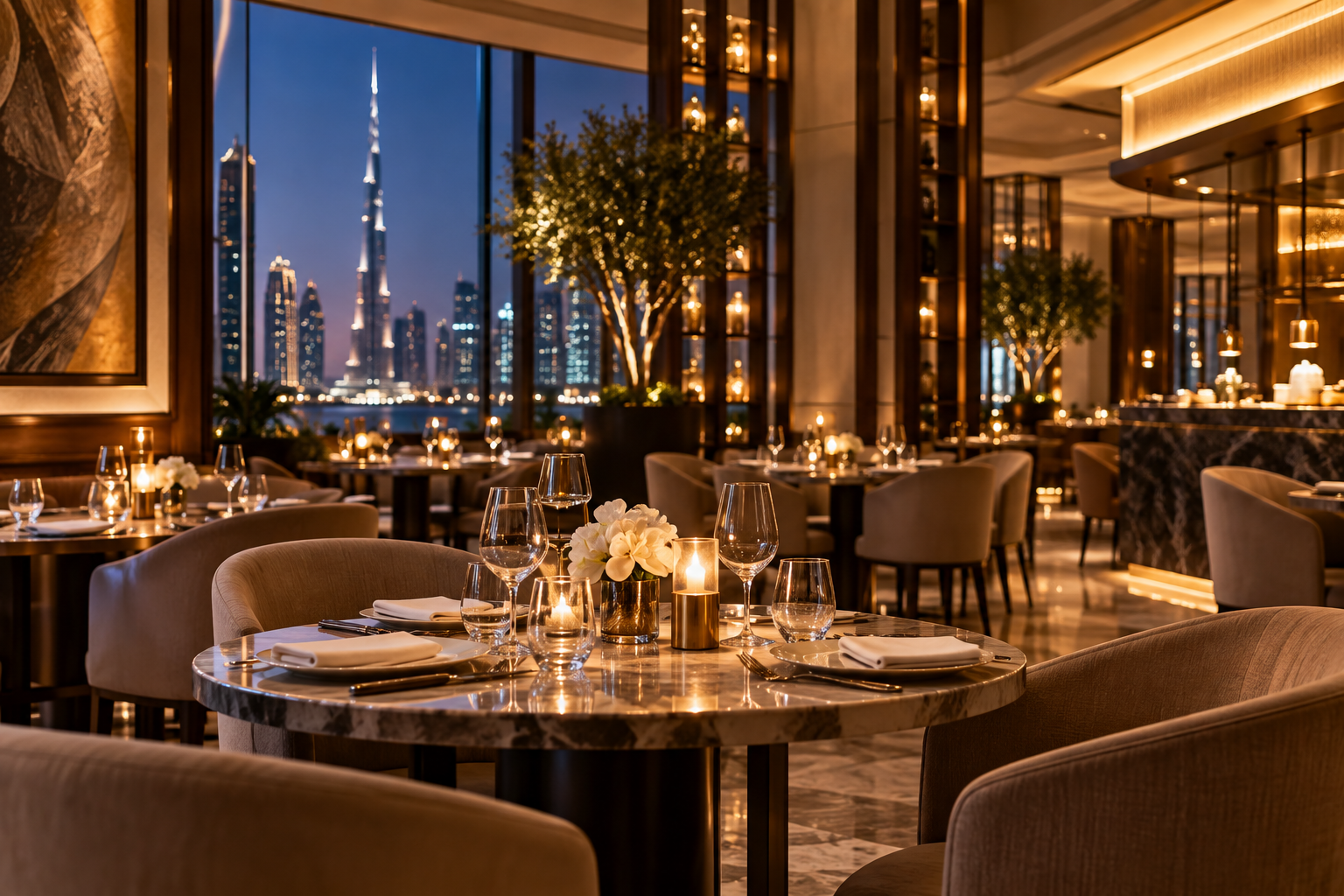
AI-generated image for illustrative purposes.
Why the restaurants are in the hotels
The pattern strikes most first-time visitors as odd. In London, Paris or Tokyo, the destination restaurants are largely independent, and the hotel dining room is a convenience. In Dubai, the reverse is closer to true: a substantial share of the city's most ambitious kitchens operate inside hotels, and residents book them routinely.
There are structural reasons. Licensing is one — alcohol service in Dubai operates under a permit framework administered by the emirate's Department of Economy and Tourism, and licensed venues have historically clustered in hotels. A restaurant that wants to serve wine has generally needed a hotel address, which pulled ambitious operators into hotel real estate.
The second reason is capital. Hotel groups here can underwrite a restaurant's opening costs, absorb a slow first year and pay for a name above the door in a way an independent operator usually cannot. The result is a city where the best rooms, the best kitchens and the best service teams tend to sit under the same roof as the bedrooms.
What the MICHELIN Guide changed
The arrival of the MICHELIN Guide in Dubai gave the city something it had never had: an external, comparative frame of reference. Before it, the local dining conversation was conducted almost entirely in the language of marketing.
Two effects have followed. The first is visible in the selection itself, which spans a wide range of price points and includes a number of hotel restaurants — a useful corrective to the idea that hotel dining and serious cooking are separate categories. The second is competitive: kitchens now have something to aim at that is not a press release.
Star counts and selections change with each edition, so we do not publish them here. Check the current Dubai selection on the MICHELIN Guide's own site before planning a trip around a specific restaurant.
The clusters: where the food actually is
Four areas account for most of the city's significant hotel dining. DIFC is the densest and the most urban — restaurants that behave like restaurants, walkable in a single evening, busy with residents rather than guests. Downtown is close behind, with the added draw of fountain-facing terraces and the volume that comes with the mall.
The Palm Jumeirah resorts form a third cluster, concentrated in the large properties on the crescent, where multiple destination restaurants can sit inside a single hotel. And the Jumeirah coast holds a fourth, older cluster, spread across the established beach resorts.
Za'abeel has emerged as a fifth, driven by the elevated venues in the One Za'abeel development. It is not walkable in the DIFC sense, but it has changed the map's shape.
Resort dining versus urban hotel dining
These are different businesses wearing similar clothes. A resort restaurant is designed for a guest who is already on site, who has swum all day, who will arrive at eight and leave by ten, and who is often eating with children. The menus are broader, the service pace is gentler, and the room is usually large.
An urban hotel restaurant competes with the street. Its customers mostly did not arrive in a lift; they booked a table and drove there. That produces smaller rooms, tighter menus, later hours and a noticeably more local crowd.
The practical implication for visitors: if you are staying on the coast and want a serious dinner, decide early whether you are eating in your ecosystem or travelling. A DIFC table from a Palm hotel is a forty-minute proposition each way, which is fine once in a trip and tiresome twice.
The chef-name model, and how to read it
A great many Dubai hotel restaurants carry the name of an internationally known chef. This is a legitimate model — the good ones invest heavily in the kitchen team and the chef is genuinely involved in the menu — but it requires reading carefully.
Two things to check before booking. First, whether the affiliation is current: chef partnerships in this city rotate more frequently than in Europe, and third-party listings lag by months. Second, what the format is — several signature rooms operate a tasting menu only, which is not always obvious from a listing and is a significant commitment on a resort holiday.
The reliable source in both cases is the hotel's own dining page. If it does not name the chef and the format clearly, treat that as information.
Practical intelligence for visitors
Book earlier than you would at home. The city's best hotel tables at weekends — Friday and Saturday — go weeks out, and the sunset and fountain-facing seats go furthest out of all.
Ask about the dress code, which is real at the higher end and enforced more often than guests expect. Ask about terrace availability by season: outdoor tables are the prize from roughly November to March and effectively unusable in midsummer, when the same restaurant is a different experience indoors.
Understand that licensed service means hotel venues. If your evening involves wine, it will almost certainly involve a hotel restaurant or a licensed outlet, and during Ramadan the daytime rhythm changes — Visit Dubai publishes current guidance each year and it is worth reading if your dates fall in that period.
Finally, brunch. The Dubai weekend brunch is a genuine local institution rather than a tourist invention, it is hosted overwhelmingly by hotels, and it books out. It is also several hours long, which is worth knowing before you schedule anything for the same afternoon.
Where the interesting dining sits
The large Palm resorts operate the broadest programmes, with several distinct destination restaurants inside a single property — the reason a guest there can eat well for three nights without leaving. Atlantis The Royal and Atlantis, The Palm are the clearest examples of that model.
One&Only The Palm has taken the opposite approach with a small number of highly positioned rooms rather than a spread, which is consistent with the property's general posture.
On the coast, Mandarin Oriental Jumeira and the Bvlgari resort on Jumeira Bay both built dining programmes with named international kitchens attached, and the Jumeirah group's flagship properties have long treated their restaurants as attractions in their own right. In the city, The Lana arrived with a dining line-up positioned as a primary reason to visit rather than an amenity for guests.
In every case: check the current roster on the hotel's site. Naming a concept that closed last season is the most common error in Dubai restaurant writing, and we would rather send you to the source.
The Dubai Hotels Magazine view
The hotel dining model is Dubai's most misunderstood strength. Visitors arrive expecting the international-hotel-buffet cliché and find a city where the most interesting kitchens, the deepest wine lists and the best-trained floor teams are all located in the same buildings as the bedrooms.
Plan around it rather than against it. Pick one serious hotel restaurant per two nights, book it before you arrive, and fill the gaps casually. That is a better trip than trying to eat somewhere celebrated every night — and considerably better than eating whatever is nearest because the good tables had gone.
Sources
Factual detail in this article was checked against first-party and authoritative sources on . Times, prices, opening hours and menus change — confirm current details with the provider before travelling.
- https://guide.michelin.com/ae/en/dubai-emirate/dubai/restaurants
- https://www.michelin.com/en/publications/products-and-services/the-michelin-guide-ceremony-dubai-2025
- https://www.dubaidet.gov.ae/en/licences-and-permits/hospitality-services-and-permits
- https://www.visitdubai.com/en/articles/how-to-experience-ramadan-in-dubai
- https://www.oneandonlyresorts.com/the-palm/dining
- https://www.mandarinoriental.com/en/dubai/jumeira-beach/dine
- https://www.jumeirah.com/en/stay/dubai/burj-al-arab/dining
- https://www.atlantis.com/dubai/atlantis-the-royal/dining
- https://www.dorchestercollection.com/dubai/the-lana/dining
- https://www.bulgarihotels.com/dubai/dining
About the author
The Editorial Team — Reporting, reviews and guides produced by the Dubai Hotels Magazine editorial team.
Our authorsHotels in this article
Where to stay
Palm JumeirahLuxury
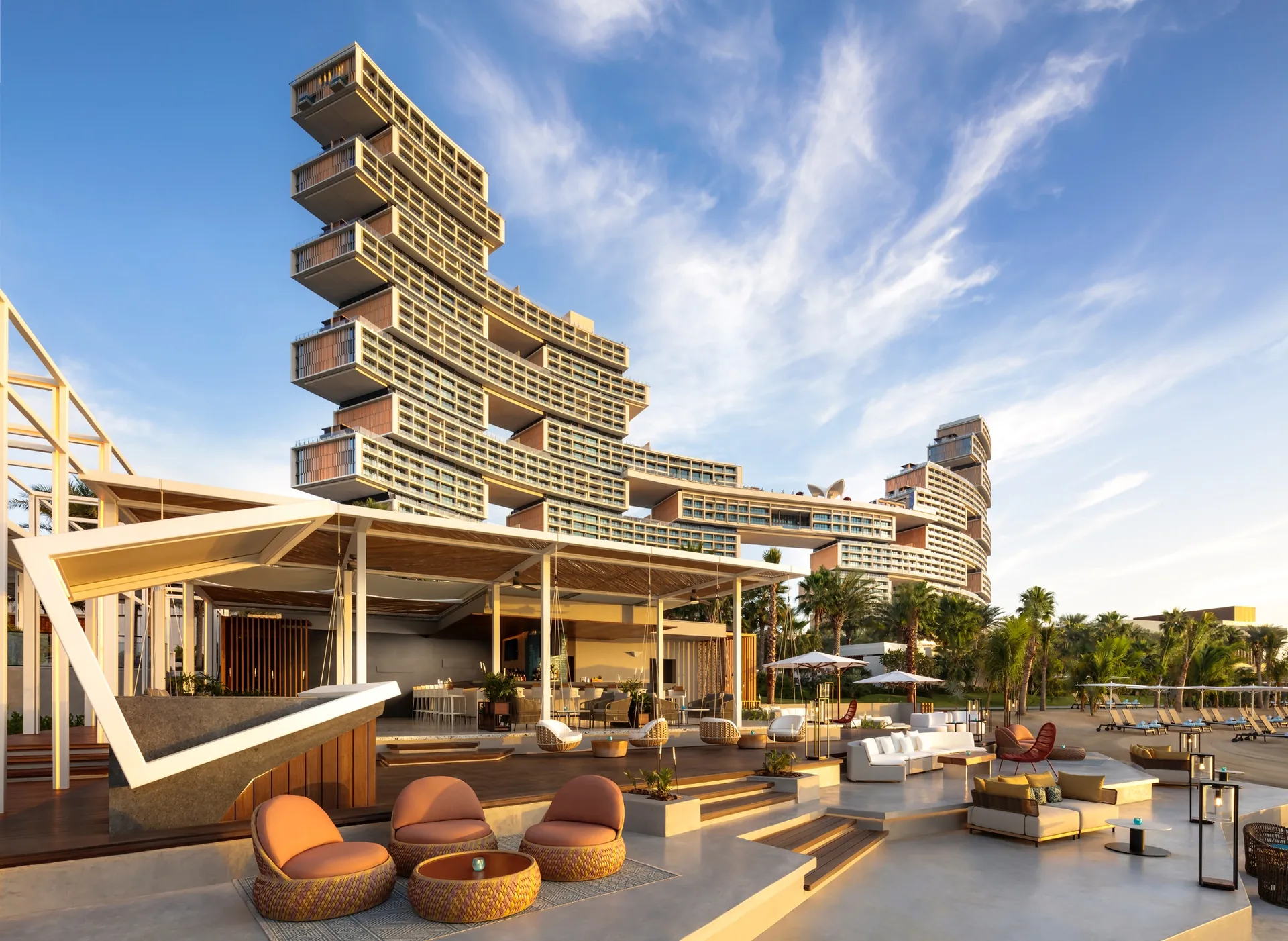
Atlantis The Royal
Kerzner's stacked-block landmark on the Palm crescent, built around a chef-driven restaurant collection and a resort programme of its own.
- Beach
- Fine Dining
- Pool
Palm JumeirahLuxury
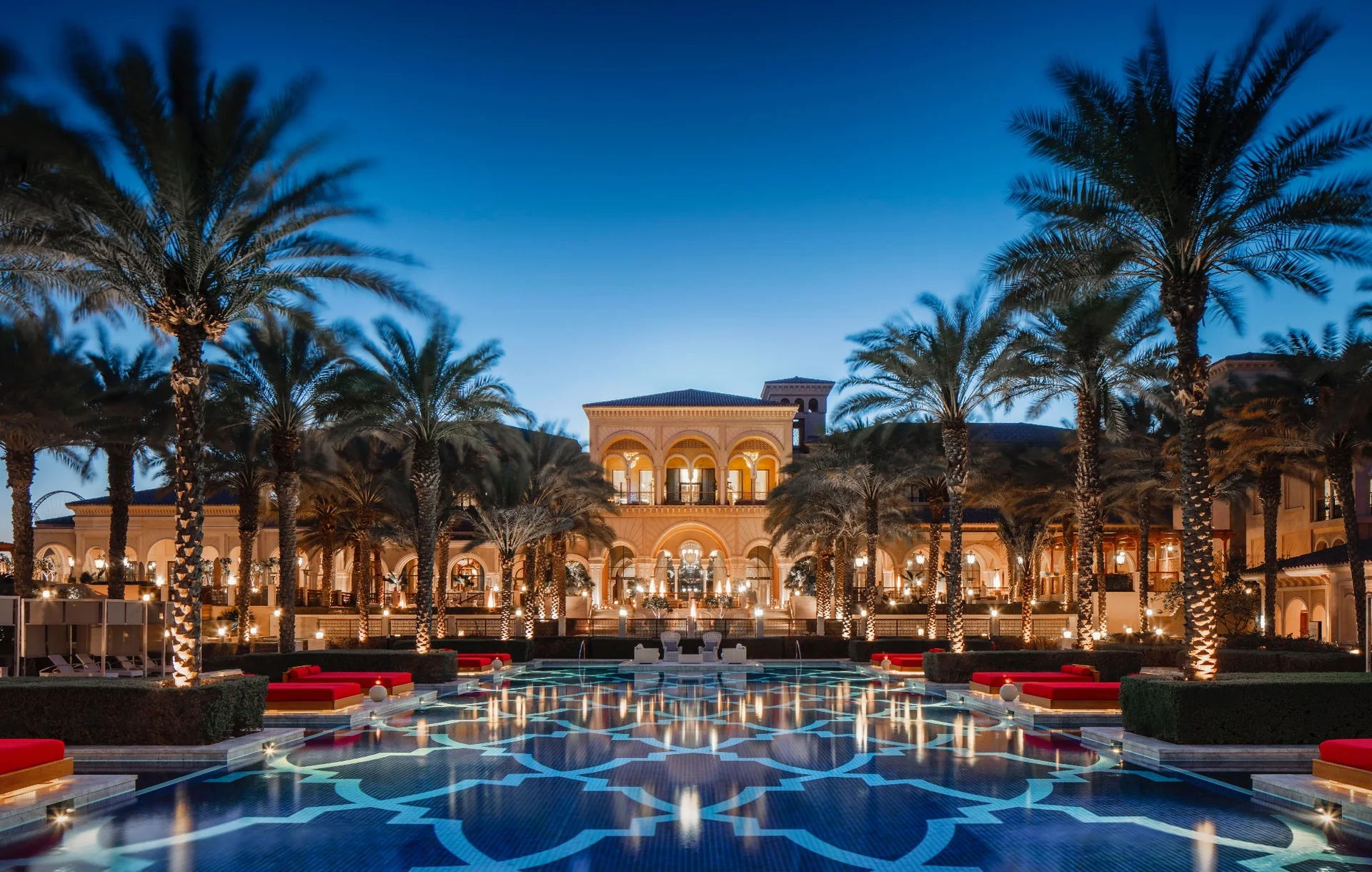
One&Only The Palm
Low-rise Andalusian-inflected rooms, suites and villas on a quiet stretch of the Palm, with two-Michelin-starred STAY by Yannick Alléno.
- Beach
- Fine Dining
- Spa
JumeirahLuxury
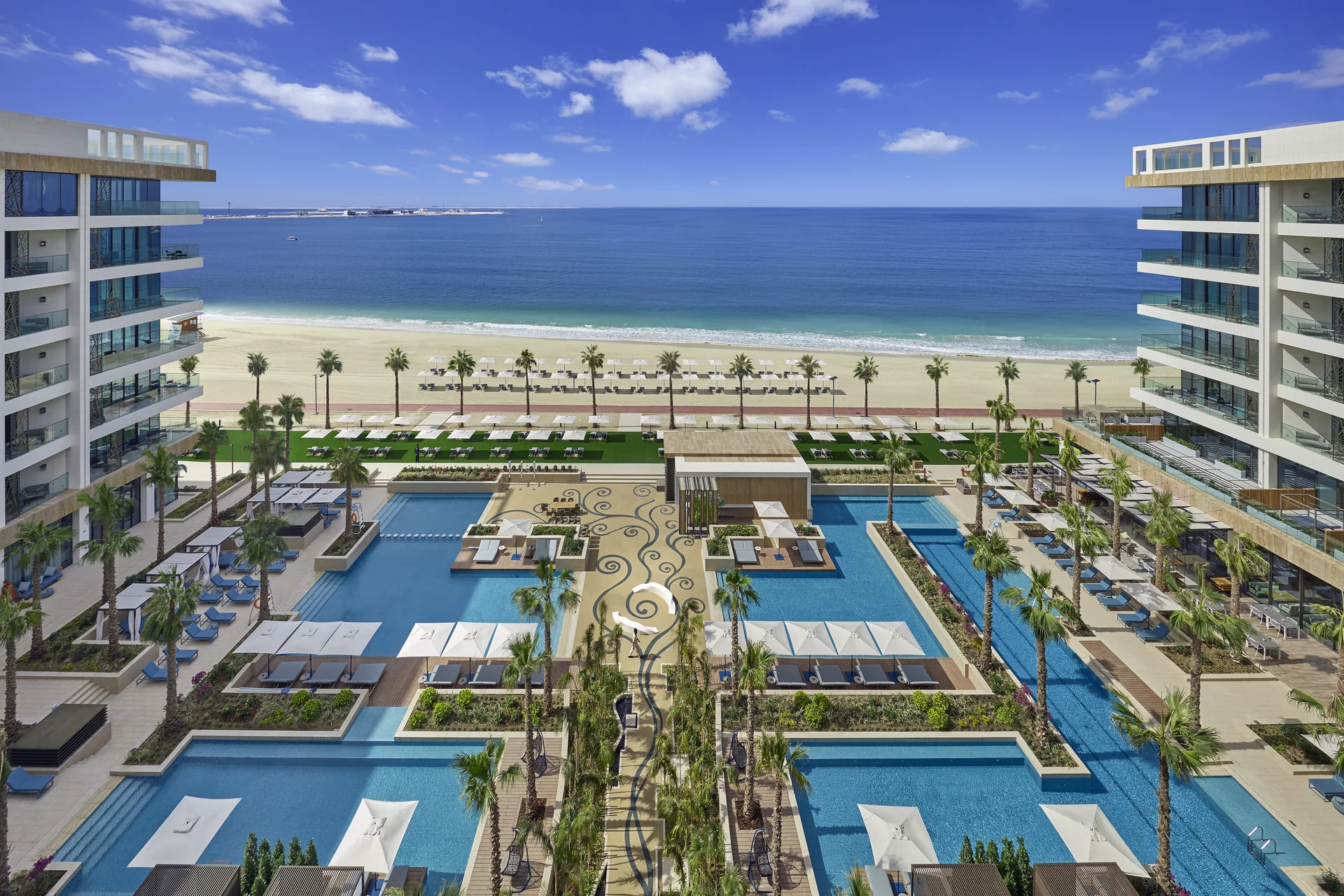
Mandarin Oriental Jumeira, Dubai
A beachfront address on Jumeirah Beach Road that behaves like a city hotel — strong dining, a serious spa, and the skyline fifteen minutes away.
- Beach
- Spa
- Fine Dining
Jumeira BayLuxury
Bvlgari Resort Dubai
Antonio Citterio Patricia Viel's seahorse-shaped island resort: balconied rooms from 53 sqm, standalone villas and a private marina.
- Beach
- Fine Dining
- Spa
Business BayLuxury
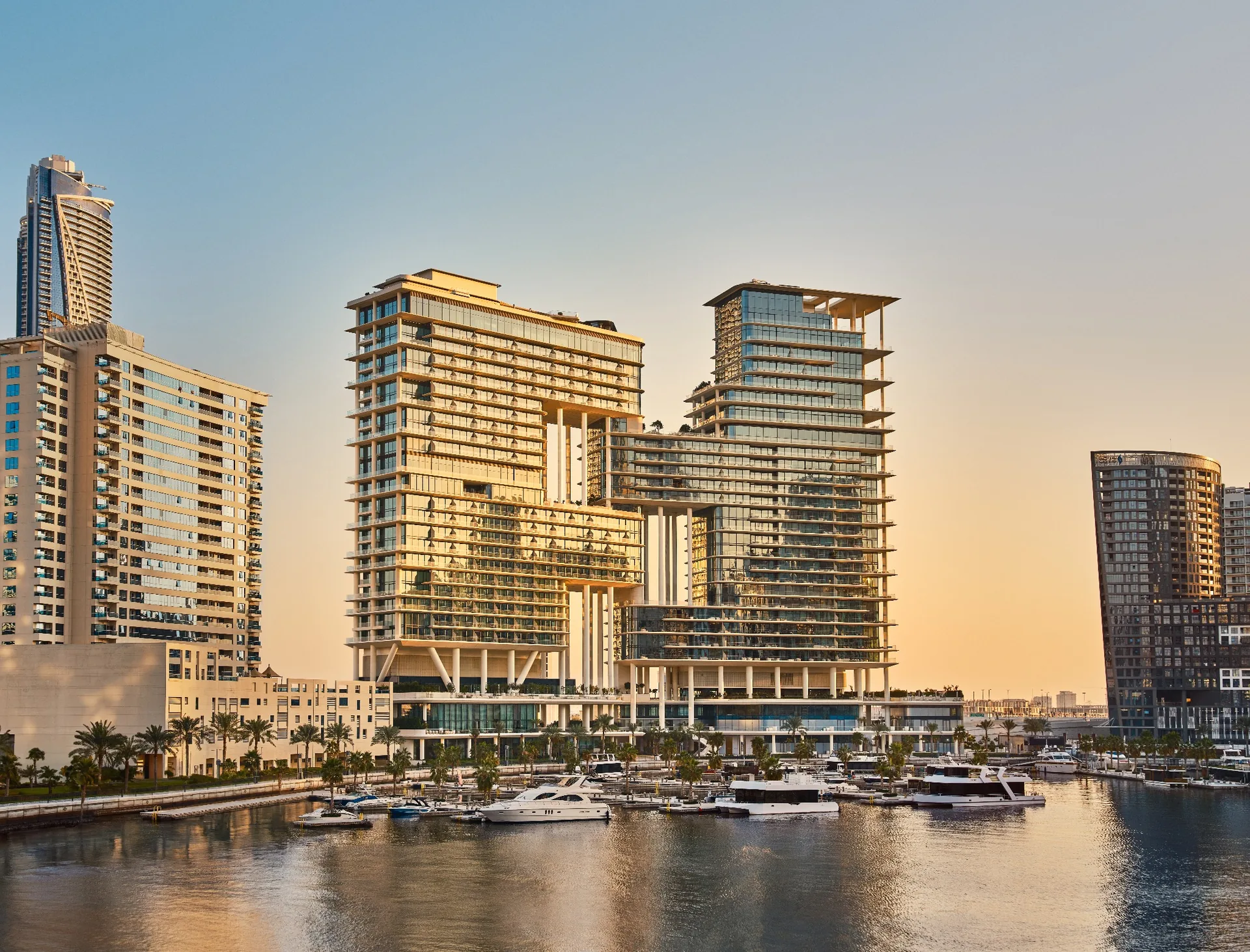
The Lana, Dorchester Collection
Dorchester Collection's first Middle East hotel, on Marasi Drive in Business Bay — waterfront, architecture-led and dining-driven.
- Fine Dining
- Spa
- Pool
JumeirahLuxury
Closed for restoration
Jumeirah Burj Al Arab
198 duplex suites on a man-made island 280 metres offshore — the sail-shaped silhouette that fixed Dubai in the global imagination.
- Beach
- Fine Dining
- Spa
Destinations
Explore the destinations
Read next
More from the magazine
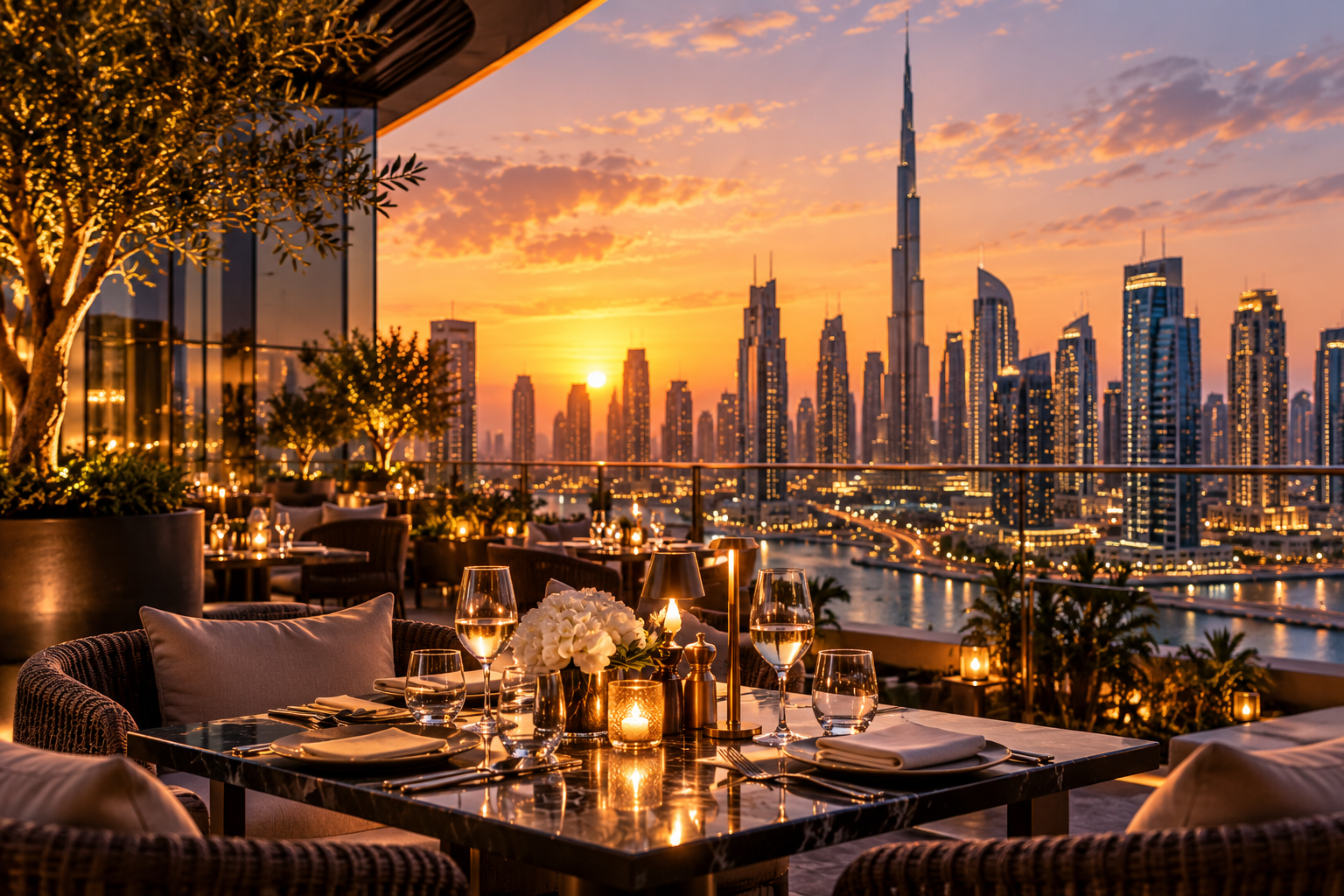
AI-generated image for illustrative purposes.
Eat & DrinkRooftops
Rooftop Dining and Drinks in Dubai
A city with this much vertical ambition was always going to put its tables in the air. What actually separates a good Dubai rooftop from an expensive one.
By The Editorial Team
FeaturesNew & Noteworthy
Dubai's New Generation of Luxury Hotels
A short, intense opening cycle changed what a luxury hotel in this city is expected to be. Not bigger — different: wellness as architecture, dining as identity, and privacy as the scarcest amenity of all.
By The Editorial Team
StayWhere To Stay
The Business Districts: Staying in DIFC and Business Bay
Two districts built for work that turned into the most convincing places in Dubai to eat, drink and — increasingly — stay. Why leisure travellers keep booking them by accident and staying on purpose.
By The Editorial Team