
Stay
The Business Districts: Staying in DIFC and Business Bay
Two districts built for work that turned into the most convincing places in Dubai to eat, drink and — increasingly — stay. Why leisure travellers keep booking them by accident and staying on purpose.
By The Editorial Team
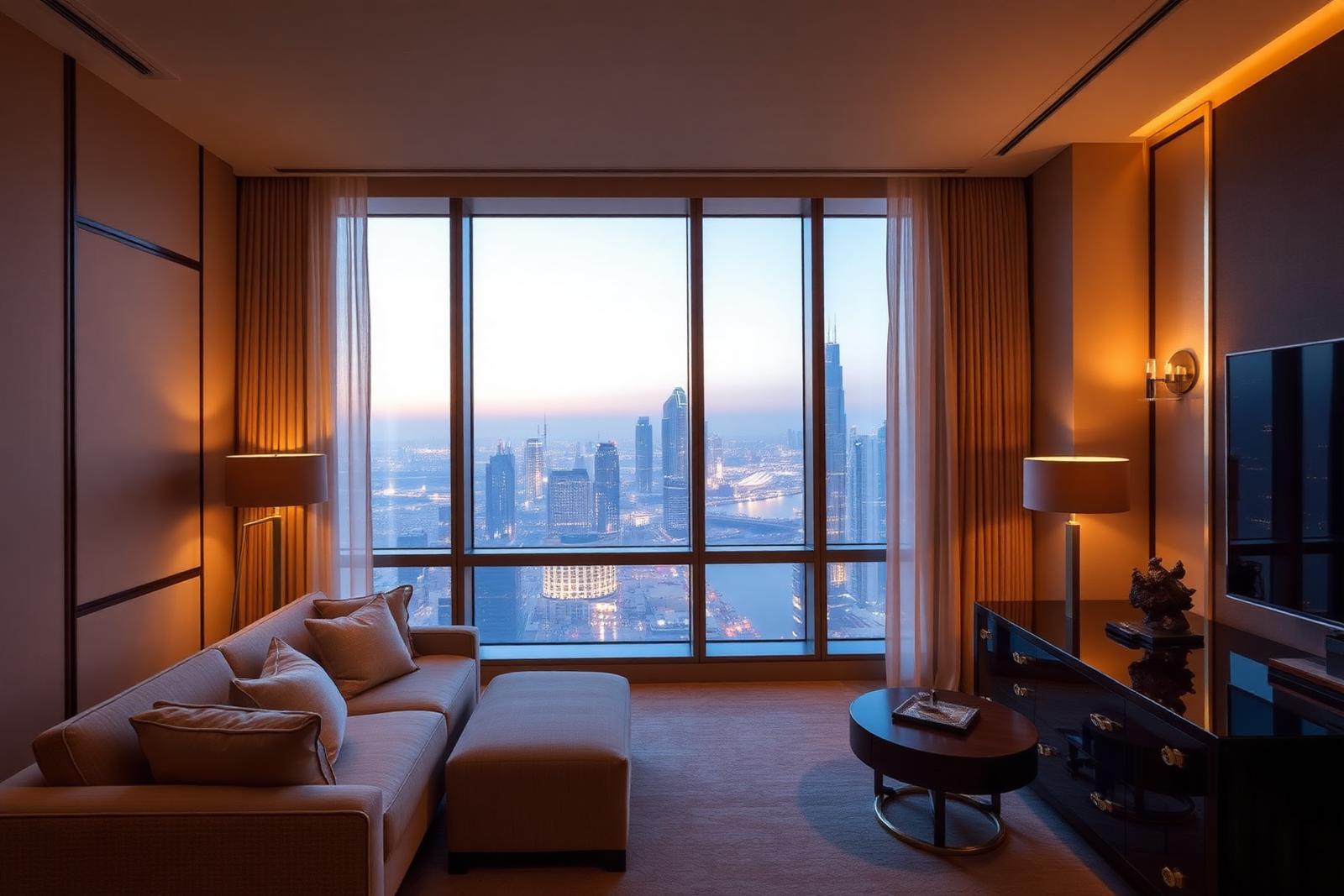
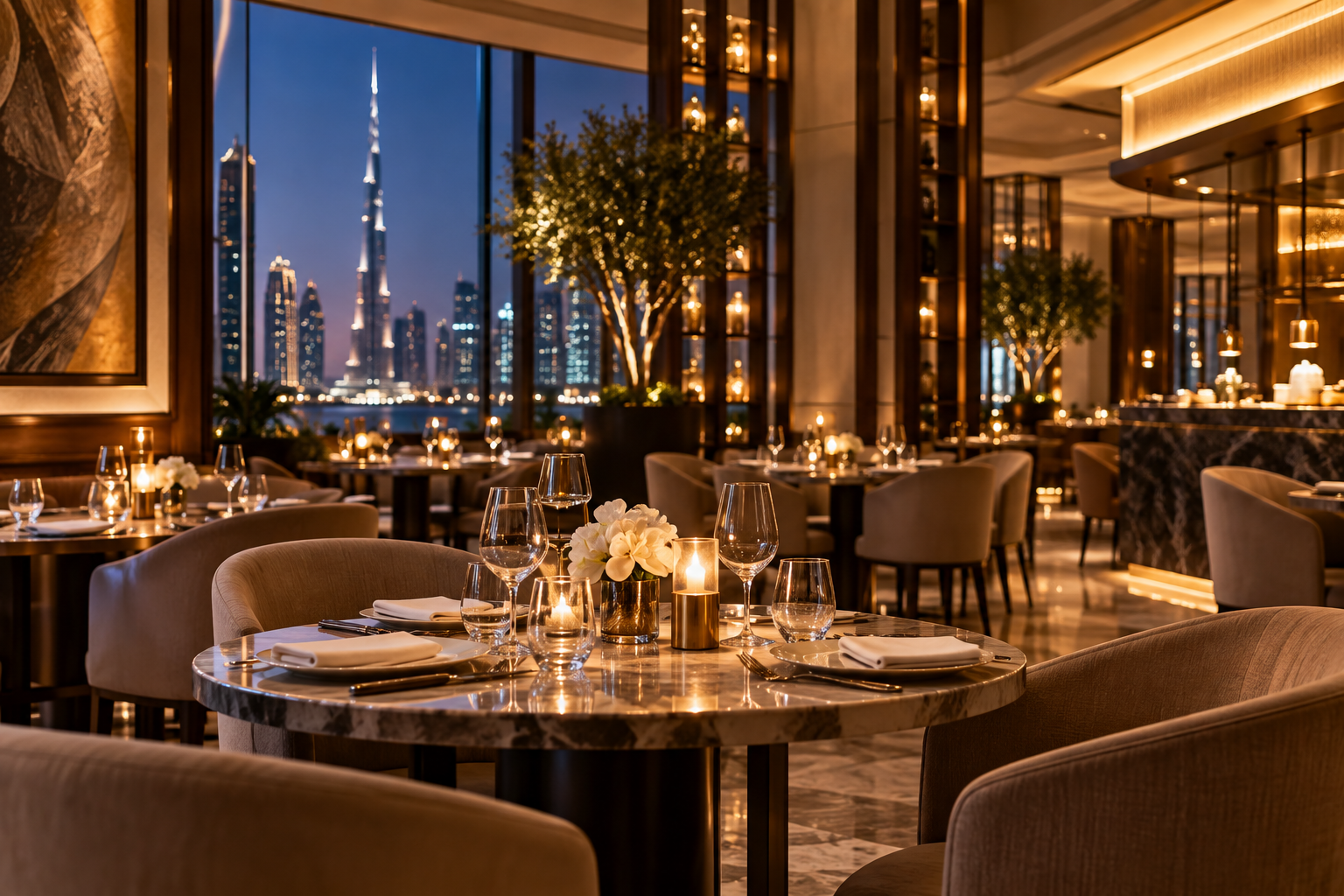
AI-generated image for illustrative purposes.
Two districts, one misunderstanding
DIFC and Business Bay are adjacent to Downtown, adjacent to each other, and constantly confused. They are not the same place and they do not offer the same stay.
The Dubai International Financial Centre is a defined financial free zone with its own regulatory framework, a compact and largely walkable core, and — almost incidentally — the densest concentration of good restaurants and galleries in the city. Business Bay is a much larger mixed-use district south of Downtown, built around the Dubai Canal, with residential towers, offices, hotels and a waterfront promenade.
The shorthand: DIFC is small, dense and evening-oriented. Business Bay is large, spread out and residential in feel. Both are five to fifteen minutes from the Burj Khalifa depending on traffic.
Why leisure travellers end up here
Three reasons, in descending order of honesty. Value, first: an equivalent standard of hotel typically costs less here than on the Downtown boulevard or on the beach, and the difference over a week is significant.
Second, food. If your idea of a good trip involves eating well every night, DIFC is the most efficient base in Dubai. You can walk between serious restaurants, which is not true anywhere else in the city.
Third, calm. These districts empty at the weekend rather than filling up, which inverts the usual tourist-district problem. A Saturday morning in DIFC is one of the quietest experiences available in central Dubai.
DIFC: the walkable evening
The DIFC core is arranged around the Gate building and its surrounding blocks, and the density of restaurants, bars and galleries within that footprint is unmatched locally. It is the only part of the city where an evening can plausibly involve three venues and no taxi.
The crowd is residential and professional rather than touristic, which changes the tone considerably — earlier reservations, more conversation, less spectacle. Dress codes are real and enforced at the higher end.
The hotels reflect it. Four Seasons Hotel Dubai International Financial Centre and Waldorf Astoria Dubai International Financial Centre are both business-district hotels that have built substantial dining programmes, and their restaurants pull local bookings independently of the rooms. That is the tell of a functioning urban hotel rather than a place people sleep between meetings.
Business Bay: canal-side and cheaper
Business Bay's asset is the Dubai Canal and the promenade along it, which is genuinely pleasant to walk in the cooler months and gives the district something the towers alone would not.
The hotel stock here ranges widely — a lot of serviceable four-star product, a smaller number of genuinely luxury addresses — and the variance is much greater than in DIFC. Read individual properties carefully rather than trusting the district label.
The Lana, Dorchester Collection's first Middle East hotel, is the district's most significant address and a marker of how far Business Bay has moved. A brand whose reputation rests on discretion and service depth chose a canal-side site in a business district over a beachfront, which would have been a strange decision a decade ago and is a logical one now.
Getting around from a business-district base
Both districts sit on the metro's main corridor, with stations serving DIFC and Business Bay, and both are short taxi rides from Downtown. That combination — metro access plus cheap short hops — is why these districts work as bases despite not being tourist areas.
Walking between DIFC and Downtown is theoretically possible and practically unpleasant in summer, involving major road crossings. Business Bay to Downtown is similar: fine in January, not in July.
The beach is twenty to thirty minutes by road. Plan beach time as a day out rather than a morning habit, or split your trip and move to the coast for the second half.
Who these districts suit
Business travellers, obviously — this is what the districts were built for, and the hotels are competent at it in a way beach resorts are not.
Repeat visitors who have already done the sights and now want to eat, drink and move around a functioning city. This is the group that has driven the shift most.
Longer-stay travellers, for whom the rate difference compounds and the residential feel becomes an advantage rather than a shortfall.
Couples on a short, food-led trip, particularly in DIFC, where the walkable evening removes the logistical friction that makes Dubai dining tiring.
They suit families least. There is little for children, no beach, and the pools are urban. First-time visitors with a sightseeing list are usually better served in Downtown proper.
What you give up
The beach, entirely. The fountain and the tower at close range, which is a real loss on a first visit. And a certain amount of atmosphere: these are handsome, well-run districts, but nobody has ever described a financial free zone as romantic.
You also give up daytime life in DIFC at weekends. The offices empty, and the district's restaurants — many of which trade heavily on weekday lunch — operate on a different rhythm. Check opening days if a specific place matters to you.
Practical booking notes
Establish which district a hotel is actually in. A great many properties marketed as Downtown are in Business Bay, and the difference is a fifteen-minute walk you may not want to make in August.
Ask about the canal or skyline aspect. In Business Bay in particular, room orientation varies enormously within a single building, and a canal-facing room is a materially different product from one looking at the next tower.
Weekday and weekend rates behave differently here from tourist districts — business districts are often cheaper at weekends, which is the opposite of the beach. If your dates are flexible, that is free money.
And as everywhere in Dubai, confirm restaurant line-ups, opening hours and hotel facilities on the property's own current pages. Concepts in these two districts turn over faster than anywhere else in the city.
A weekend built from a business-district base
The pattern that works: mornings out, afternoons indoors, evenings on foot. From DIFC you can be at the tower in ten minutes, in the old town on the creek in twenty, and back for a dinner you walk to. That combination is not available from the beach districts without surrendering an hour a day to the car.
Saturdays are the district's quiet day, which makes them the right day for the things everyone else is doing — the mall, the aquarium, the observation deck — because your return journey is against the traffic.
Art is the under-used argument. DIFC holds a concentration of commercial galleries within its core, most of them free to walk into, and an hour spent that way is the most local thing a visitor can do in this part of the city.
Business travellers: the practical read
If your meetings are in DIFC, stay in DIFC — the walk-to-meeting advantage is worth more than any rate difference, and the alternative is a taxi in both directions at exactly the hours the roads are worst.
If your meetings are spread between Business Bay, Downtown and DIFC, Business Bay is the better centre of gravity, and the canal-side hotels give you somewhere to walk at the end of the day.
For longer working stays, the district's residential character becomes the main asset: supermarkets, laundries, gyms and ordinary restaurants within reach, none of which the resort districts provide conveniently.
The Dubai Hotels Magazine view
The business districts are Dubai's most underrated places to stay, and the reason is simply that they were not designed for visitors. That absence of design intent is what makes them good: the restaurants have to satisfy residents, the hotels have to compete on service rather than spectacle, and the streets are not organised around a photograph.
For a first trip, stay Downtown. For a second, stay in DIFC and see how different the same city feels when you are not standing in the middle of the attraction.
Sources
Factual detail in this article was checked against first-party and authoritative sources on . Times, prices, opening hours and menus change — confirm current details with the provider before travelling.
- https://www.difc.com/
- https://www.fourseasons.com/dubaidifc/
- https://www.hilton.com/en/hotels/dxbdiwa-waldorf-astoria-dubai-international-financial-centre/
- https://www.dorchestercollection.com/dubai/the-lana/
- https://media.dorchestercollection.com/dorchester-collection-opens-first-hotel-in-the-middle-east
- https://www.rta.ae/wps/portal/rta/ae/public-transport/dubai-metro
- https://www.visitdubai.com/en/places-to-visit/dubai-water-canal
About the author
The Editorial Team — Reporting, reviews and guides produced by the Dubai Hotels Magazine editorial team.
Our authorsHotels in this article
Where to stay
DIFCLuxury
Four Seasons Hotel Dubai International Financial Centre
Four Seasons' smaller Dubai address, inside DIFC — built for business days and a dining scene that runs late.
- Fine Dining
- Spa
- Pool
DIFCLuxury
Waldorf Astoria Dubai International Financial Centre
Waldorf Astoria's DIFC tower: a business-district address with a dining programme that draws the district in.
- Fine Dining
- Spa
- Pool
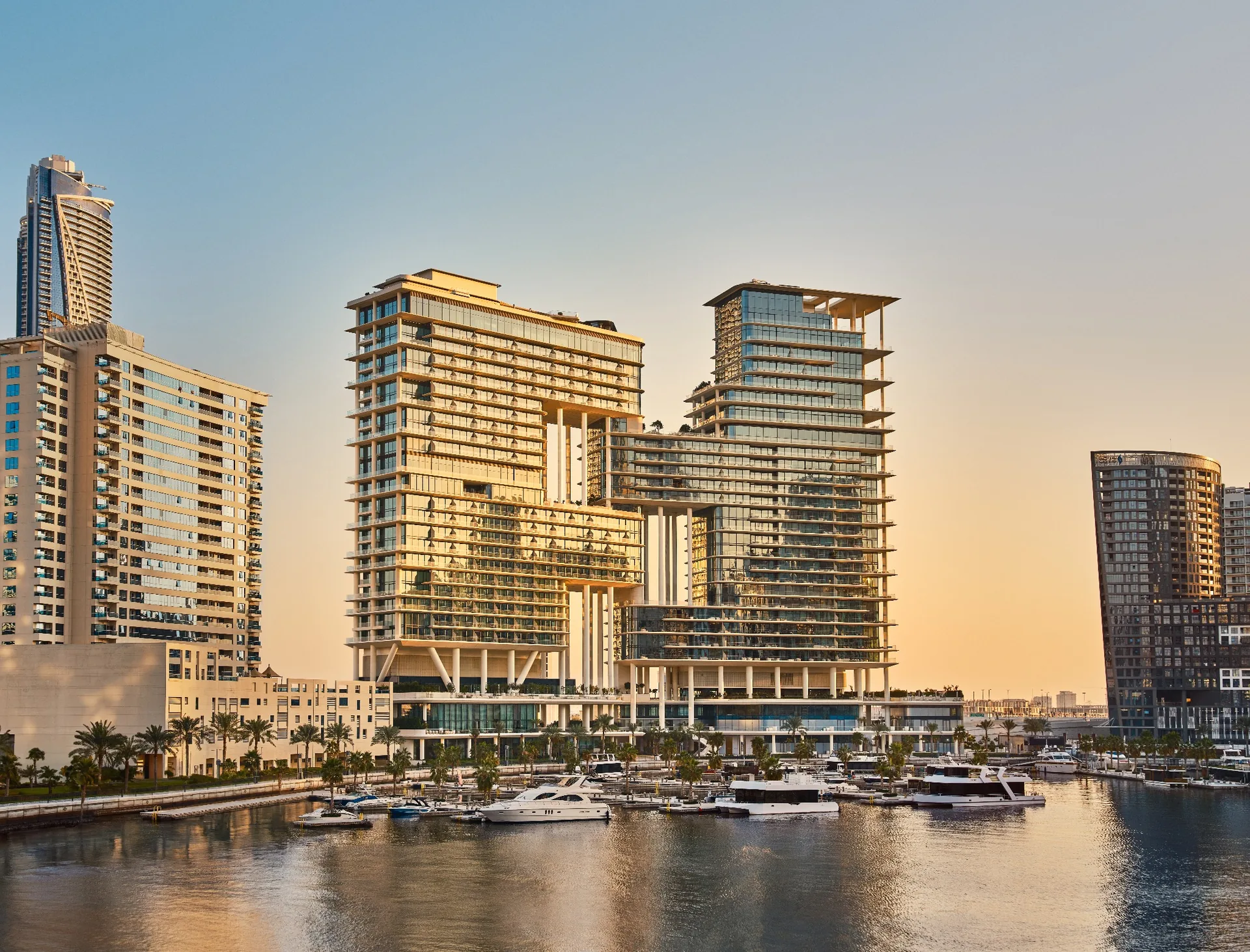
Business BayLuxury
The Lana, Dorchester Collection
Dorchester Collection's first Middle East hotel, on Marasi Drive in Business Bay — waterfront, architecture-led and dining-driven.
- Fine Dining
- Spa
- Pool
Destinations
Explore the destinations
Read next
More from the magazine
AI-generated image for illustrative purposes.
Eat & DrinkRooftops
Rooftop Dining and Drinks in Dubai
A city with this much vertical ambition was always going to put its tables in the air. What actually separates a good Dubai rooftop from an expensive one.
By The Editorial Team
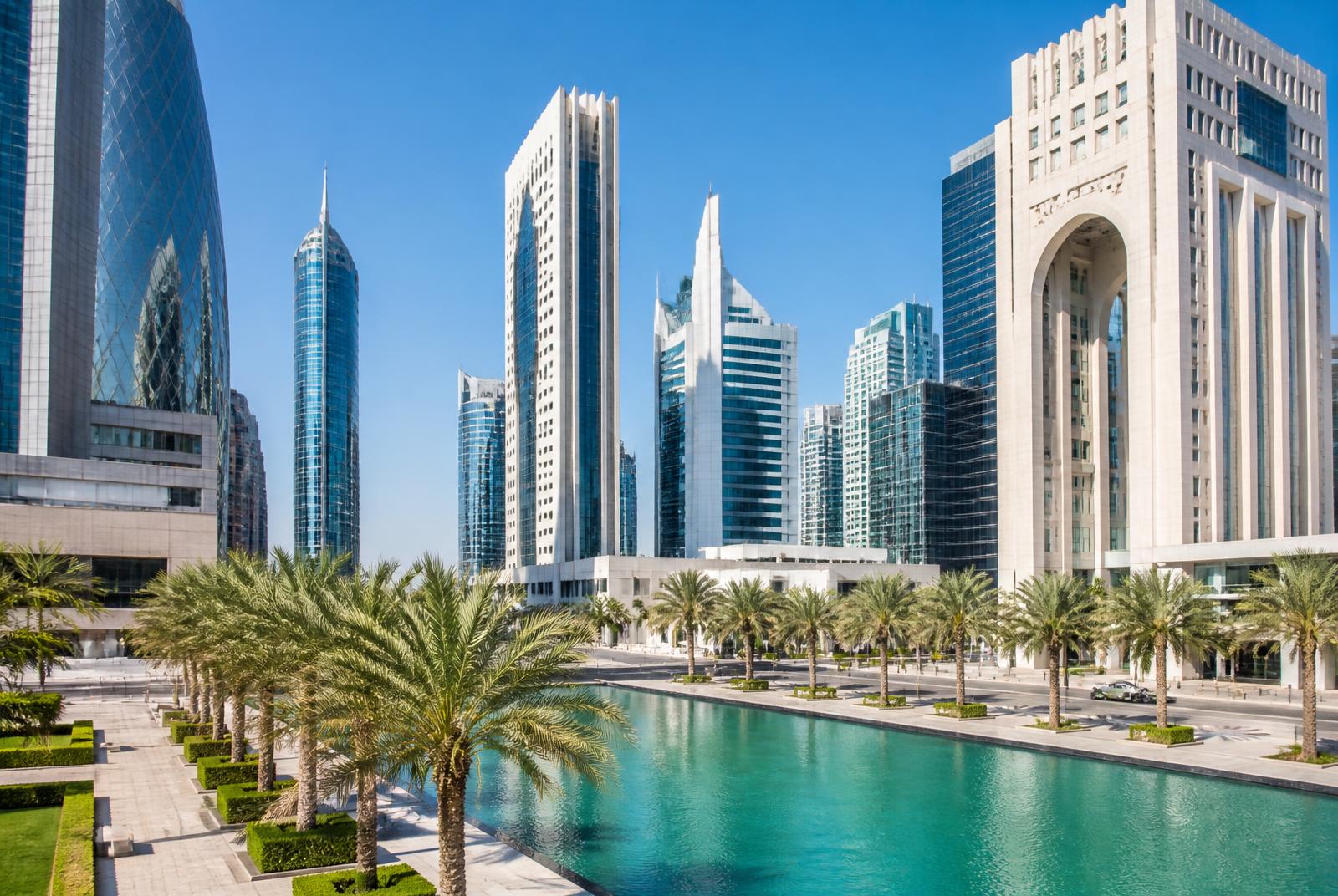
StayWhere To Stay
Where to Stay in Downtown Dubai
The one district where you can leave the car behind. What Downtown actually covers, how the micro-locations differ, and the trade you make by booking here.
By The Editorial Team
AI-generated image for illustrative purposes.
Eat & DrinkHotel Restaurants
Dubai's Hotel Dining Scene
In most cities, hotel restaurants are where you eat when you have run out of ideas. Here they are the idea. How the city's dining ended up inside its hotels, and how to navigate it.
By The Editorial Team