
Stay
Where to Stay in Downtown Dubai
The one district where you can leave the car behind. What Downtown actually covers, how the micro-locations differ, and the trade you make by booking here.
By The Editorial Team
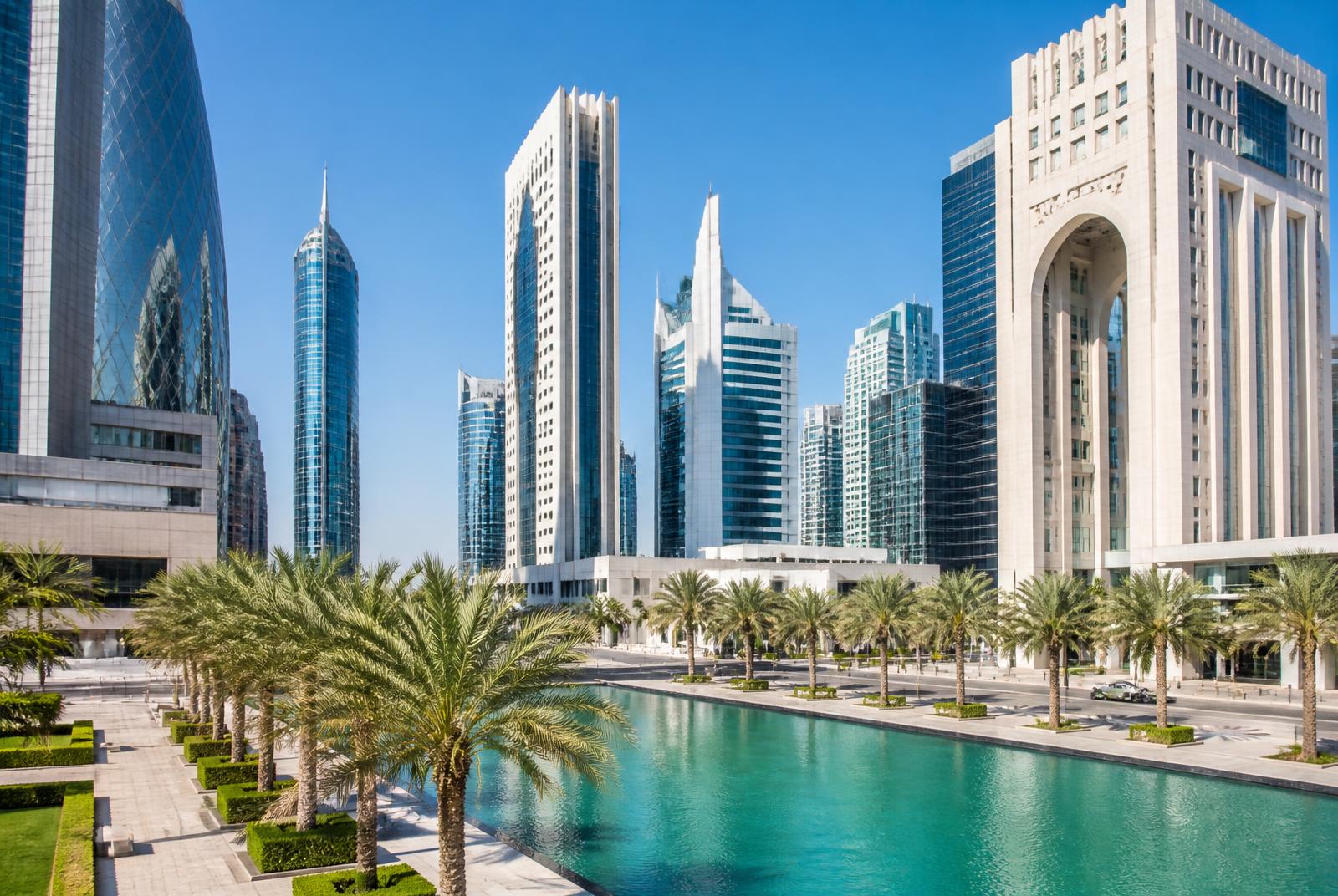
AI-generated image for illustrative purposes.
What Downtown actually encompasses
Downtown Dubai is a master-planned district developed by Emaar, and unlike most places called downtown it has a precise edge. It is organised around three things: the Burj Khalifa, which at 828 metres remains the tallest building in the world; The Dubai Mall, one of the largest retail complexes anywhere; and Burj Khalifa Lake, the artificial basin in front of the tower that the fountain performs on.
Around that core sit several distinct sub-areas that hotel listings tend to collapse into a single label. Sheikh Mohammed bin Rashid Boulevard loops around the tower and holds most of the district's mid-rise hotels and street-level restaurants. The Opera District, on the lake's western side, is quieter and organised around Dubai Opera. Souk Al Bahar, on the far side of the lake, is a low-rise retail and dining complex with the district's best front-row fountain tables. And on the southern edge, Downtown blurs into Business Bay without any obvious boundary — which matters, because plenty of hotels marketed as Downtown are in fact across that line.
This is a district built in roughly two decades on land that had none of it before, and it shows in the best way: pavements are wide, crossings are frequent, and the pedestrian links are unusually well thought out for a Gulf city.
The geography around the tower
Almost every decision here comes down to your relationship with one building. Hotels sell three broad positions: looking at the tower, standing in the tower, or sitting beneath it without seeing much of it at all. The third is more common than the pricing suggests, and it is worth checking a room's actual orientation rather than trusting a category name.
The lake is the second organising element. Rooms and restaurants facing Burj Khalifa Lake get the fountain, and the fountain is the reason the district's evening crowds move the way they do. The performances are frequent and free to watch from the public promenade, which means the lakeside walkways compress at showtime and thin out immediately afterwards.
The tower's own observation decks — the main levels partway up and a higher premium lounge — operate on timed entry and publish current pricing on the official site. Sunset slots are the scarce ones. If a tower ascent is a priority, book it before you book dinner, not after.
Micro-locations, and which side to book
Boulevard-facing addresses are the most convenient. You step out of the lobby into a functioning street with restaurants, taxis and pedestrian crossings, and you are usually within ten to fifteen minutes on foot of the mall. The noise concern most guests raise turns out not to be one; glazing in this district is uniformly good.
Lake-facing addresses cost more and are worth it once. If you are here for two or three nights and want the fountain from the room, take it. For a longer stay it stops earning the premium fairly quickly.
The Opera District is the choice for travellers who want Downtown's access without its density. It is a short walk from the same amenities and noticeably calmer in the evening. And the Business Bay fringe — technically outside Downtown, functionally adjacent — is where the value sits: lower rates, a canal-side setting, and a walk to the mall that is realistic in winter and unrealistic in July.
Walking versus taxis, honestly
Downtown is the only district in Dubai where a visitor can plan a car-free day and be right. The Dubai Mall connects to the Burj Khalifa/Dubai Mall station on the metro's Red Line, and the surrounding walkways, footbridges and air-conditioned links mean most of the core is reachable on foot from most of the hotels.
That holds from roughly November to March. In high summer, a fifteen-minute walk at midday is not a pleasant fifteen minutes, and the sensible pattern flips to short taxi hops between air-conditioned spaces. Ride-hailing and taxis are abundant and cheap by international standards; the metro is cheaper still and requires a nol card, available at stations.
One thing walkers should know: distances inside The Dubai Mall are substantial. A hotel eight minutes from a mall entrance may be twenty-five minutes from the restaurant you booked inside it. Build that in.
Who Downtown suits
First-time visitors, almost without exception. The district puts the city's defining sights, its largest retail and a functioning metro connection within one walkable envelope, which removes most of the logistical friction that makes first Dubai trips exhausting.
Business travellers with meetings in Business Bay or DIFC, both of which are short drives. Couples on short city breaks. Repeat visitors who have already done the beach and want a different version of the city. And anyone travelling without a car who dislikes negotiating transport twice a day.
It suits families less well than the marketing implies. There is no beach, the pools are urban rather than resort-scale, and children tire of malls faster than adults do.
The hotels: three different propositions
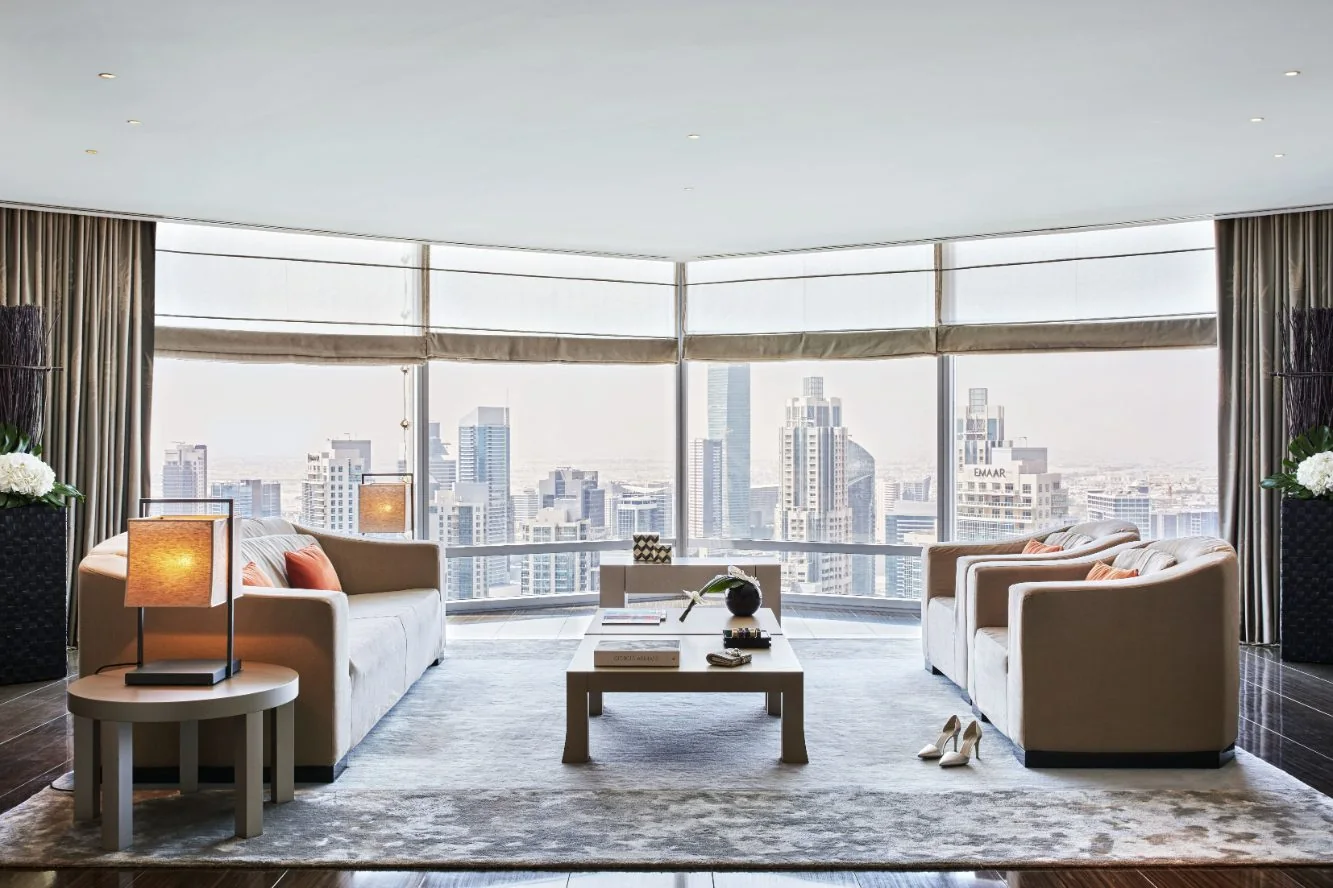
Armani Hotel Dubai occupies the lower section of the Burj Khalifa itself, with interiors designed under Giorgio Armani's direction and direct access to The Dubai Mall. It is the most restrained hotel in the district and the least resort-like: a single consistent design language, no beach programme, no attempt at spectacle beyond the address. It suits travellers who want the landmark as a place to live rather than a photograph, and who will spend their days out in the city.
Address Sky View is the clearest expression of the tower-hotel format — twin towers, a sky bridge, and a rooftop restaurant that trades explicitly on altitude. It is the choice for guests who want the view to be the point, and for whom a lift ride to dinner is a feature rather than a chore.
Palace Downtown takes the opposite line entirely: low-rise, Arabesque in style, set directly on Burj Khalifa Lake with the fountain in front of it. It is the quietest of the three, the easiest to move in and out of, and the best of them for guests who want to be at ground level with the water rather than four hundred feet above it.
These are positioning summaries drawn from each hotel's published material rather than reviews. What separates them is not quality but posture — inside the icon, above the icon, or facing it.
Eating and drinking from a Downtown base
The restaurant density within walking distance here is the highest in the city, and it spans everything from mall food halls to hotel dining rooms with international chef affiliations. Because concepts and chef partnerships in Dubai turn over quickly, we would not name a roster that might be a season out of date — check the current line-up on each hotel's own site.
Two structural points are stable. First, licensed venues — those serving alcohol — sit overwhelmingly inside hotels and specific licensed outlets under the emirate's regulatory framework, so a Downtown evening involving drinks will usually happen in a hotel restaurant or bar. Second, the fountain-facing tables at Souk Al Bahar and along the lake promenade are booked well in advance for the evening shows and are the single most requested seating in the district.
Dubai Opera, the district's cultural anchor, publishes its own programme; if you are in town for three nights it is worth a look before you fill every evening with restaurants.
The advantages, stated plainly
Walkability, in a city that generally lacks it. Metro access, which no beach district can match. Density of restaurants, retail and evening activity. Proximity to the two business districts. And a concentration of the sights a first-time visitor actually wants, which cuts an hour of travel out of most days.
There is also a less obvious advantage: it is the easiest district in Dubai to leave. Airport runs, desert transfers and day trips to Abu Dhabi all start more conveniently here than from the Palm or the outer coast.
The disadvantages, stated equally plainly
There is no beach, and the coast is a twenty-to-thirty-minute drive depending on traffic — which in practice means a beach day becomes an expedition rather than a decision. Hotel pools are urban in scale and often overlooked by towers.
The district is busy, particularly around the mall and the fountain in the evenings and at weekends, and traffic on the boulevard loop compresses accordingly. Rates are high in the cool season, when Downtown is competing for the same visitors as the beach resorts. And for travellers seeking quiet, this is the wrong half of the city.
The nearby alternatives
Business Bay is the value alternative: adjacent, canal-side, well connected by road and increasingly well served by restaurants, with rates that are usually lower than the equivalent Downtown address. It is the sensible choice for longer stays.
DIFC is the alternative for travellers who care more about dining and design than sightseeing. It is a short drive from the tower, denser in good restaurants per square metre than anywhere else in the city, and better for evenings than for daytime.
The Jumeirah coast and Palm Jumeirah are the true opposites — beach-first, resort-scale and car-dependent. A common and effective structure for a longer first trip is to split it: two or three nights Downtown to see the city, then three or four on the coast to recover from it.
Practical booking notes
Confirm three things in writing before you book. Which direction the room actually faces, because 'skyline view' and 'Burj Khalifa view' are different products at different prices. Whether the walk to The Dubai Mall is direct or requires a road crossing, which changes the summer calculation entirely. And whether the property is inside Downtown or across the line in Business Bay — the marketing does not always say.
Rates follow the season and the calendar hard. Expect the cool months, major exhibitions and the New Year fireworks period to price differently from midsummer, and expect availability during the fireworks window to be constrained months in advance. Anything time-sensitive — rates, observation deck hours, restaurant openings — should be confirmed with the provider close to travel, because this district changes faster than published guides do.
Sources
Factual detail in this article was checked against first-party and authoritative sources on . Times, prices, opening hours and menus change — confirm current details with the provider before travelling.
- https://www.emaar.com/en/other-emaar-businesses/burj-khalifa
- https://www.burjkhalifa.ae/experiences/observation-decks/
- https://www.rta.ae/wps/portal/rta/ae/public-transport/About-Nol-Card
- https://dubaiopera.com/en-US/architecture
- https://www.armanihotels.com/en/hotels/armani-hotel-dubai
- https://www.addresshotels.com/en/hotels/address-sky-view
- https://www.addresshotels.com/en/hotels/palace-downtown
- https://www.dubaidet.gov.ae/en/licences-and-permits/hospitality-services-and-permits
About the author
The Editorial Team — Reporting, reviews and guides produced by the Dubai Hotels Magazine editorial team.
Our authorsHotels in this article
Where to stay
Downtown DubaiLuxury
Armani Hotel Dubai
160 rooms and suites inside the Burj Khalifa, every element designed by Giorgio Armani — the most restrained address in Downtown.
- Fine Dining
- Spa
- Shopping
Downtown DubaiLuxury
Address Sky View
Emaar's twin towers in Downtown Dubai, linked high above the street by a sky bridge, with the Burj Khalifa in the window.
- Pool
- Fine Dining
- Rooftop
Downtown DubaiLuxury
Palace Downtown
Emaar's Arabian-styled Downtown property, set on the Burj Lake with the fountain and the tower directly in view.
- Fine Dining
- Spa
- Pool
Destinations
Explore the destinations
Read next
More from the magazine
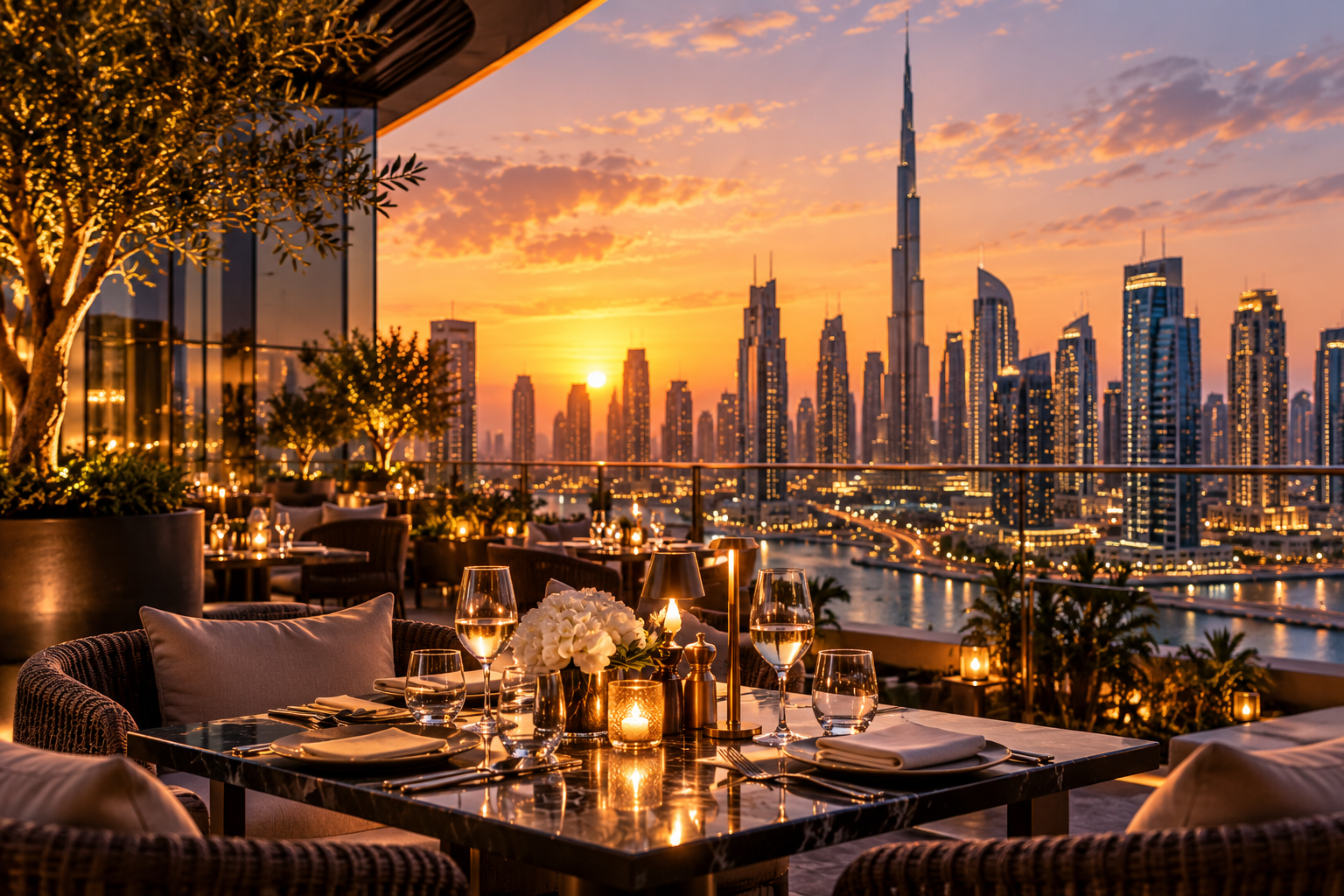
AI-generated image for illustrative purposes.
Eat & DrinkRooftops
Rooftop Dining and Drinks in Dubai
A city with this much vertical ambition was always going to put its tables in the air. What actually separates a good Dubai rooftop from an expensive one.
By The Editorial Team
GuidesItineraries
A First-Timer's Guide to Luxury Dubai
When to come, where to land, how to move, what the rules actually are, and how to structure a first week so the city makes sense rather than merely impresses.
By The Editorial Team
StayWhere To Stay
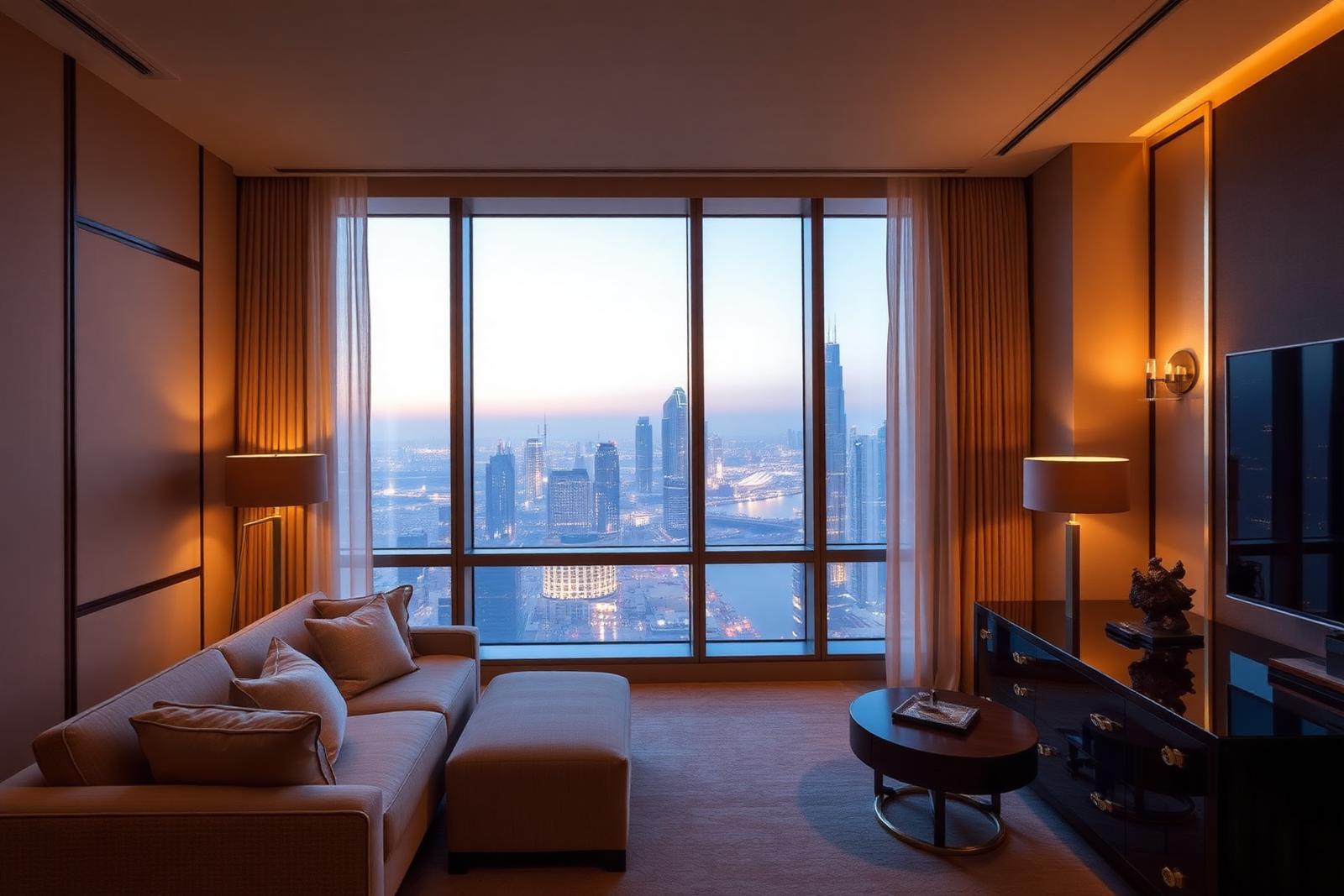
The Business Districts: Staying in DIFC and Business Bay
Two districts built for work that turned into the most convincing places in Dubai to eat, drink and — increasingly — stay. Why leisure travellers keep booking them by accident and staying on purpose.
By The Editorial Team