
Guides
A First-Timer's Guide to Luxury Dubai
When to come, where to land, how to move, what the rules actually are, and how to structure a first week so the city makes sense rather than merely impresses.
By The Editorial Team
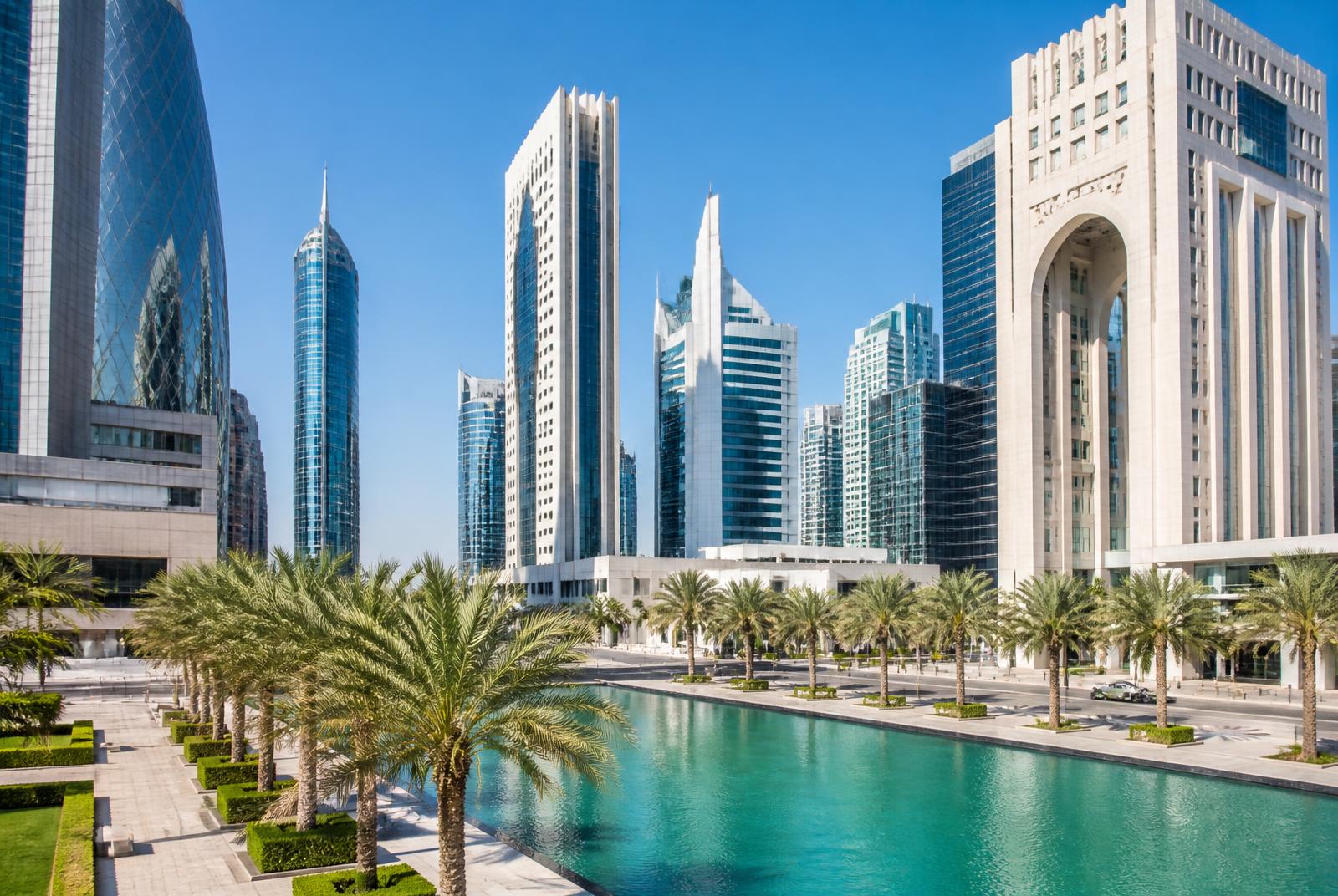
AI-generated image for illustrative purposes.
The mistake most first visits make
Dubai is easy to visit and difficult to plan. The infrastructure is excellent, English is universal in hospitality, and nothing about arriving here is stressful — which lulls visitors into treating it as a city that can be improvised. It cannot, for one reason: the distances.
What looks on a map like a compact coastal city is a linear strip roughly the length of a small country's motorway network, with the major districts strung along it. A day that includes the old town, the beach and Downtown is a day that includes two hours in a car. The single most valuable planning decision you will make is to group your days geographically.
The second most valuable is to accept that the climate, not your itinerary, sets the schedule. Outdoors is a morning and evening activity for much of the year. Plan indoor things for the middle of the day and you will enjoy the city twice as much.
When to come
Roughly November to March is the comfortable season, and it is priced accordingly. Days are warm, evenings occasionally require a jacket, and everything outdoors — beaches, terraces, the desert, walking — works as intended. This is when to come if it is your first visit and you can choose.
April, May and October are the shoulder months: hot but manageable, noticeably cheaper, best enjoyed with an early-morning and after-dark rhythm. June to September is genuinely hot and humid near the coast; hotels discount heavily, the city retreats indoors, and it is a viable trip if your plans centre on water, spas and air-conditioned interiors rather than sightseeing.
Two calendar notes. Ramadan shifts the daily rhythm of the city including daytime dining and entertainment — Visit Dubai publishes current guidance each year, and travelling during it is entirely workable if you know in advance. And the New Year period is the peak of the peak: book months out or avoid it.
For anything close to your dates, check the National Center of Meteorology rather than seasonal averages. Weather in the shoulder months is genuinely variable.
Which airport, and getting in
Dubai has two: Dubai International, close to the city and handling the overwhelming majority of long-haul traffic, and Dubai World Central to the south, used by a smaller number of carriers. Both are covered on Dubai Airports' official pages, and the difference matters mainly for transfer time — the southern airport is materially further from the coastal and central hotel districts.
Arrival is straightforward. Entry requirements vary by nationality and change, so check the current position with an official source before travelling rather than relying on a travel article, including this one.
For transfers, hotels will arrange a car and charge for the convenience; taxis and ride-hailing at the airport are plentiful and considerably cheaper. Airport-to-hotel journeys are the one time it is worth pre-arranging, particularly on a late-night arrival with luggage and children.
Getting around, ranked
Taxis and ride-hailing are the default and are inexpensive by the standards of most visitors' home cities. They are the right answer for the great majority of journeys, especially anything involving heat, luggage or a schedule.
The metro is genuinely good on the corridor it serves, running along the main artery and connecting the airport, Downtown and the Marina end of the city. It requires a nol card, available from stations, and it is the fastest option at rush hour when the road is not moving. Its limitation is that most beach hotels are not near it.
Hotel shuttles are underused. Many resorts run scheduled services to malls, beaches or the metro, and asking at check-in is worth ten minutes of your time.
Hiring a car is unnecessary for a first visit. Parking is manageable and the roads are excellent, but the combination of cheap taxis and long, unfamiliar multi-lane interchanges makes driving the wrong trade for a short trip.
The rules, plainly stated
Dubai is a comfortable place to visit and a conservative one in specific, knowable ways. The practical guidance is published by Visit Dubai and is worth reading once properly rather than absorbing second-hand.
Dress: swimwear on the beach and at the pool, cover shoulders and knees in malls, souks and public buildings. Nobody will trouble you for a sundress; it is about respecting shared spaces.
Alcohol: served in licensed venues, which are largely hotels and specific permitted outlets, under the emirate's regulatory framework. Public intoxication is treated seriously. Drink where it is served and take a taxi.
Public behaviour: displays of affection beyond hand-holding are best avoided, and photographing people — particularly local families — without permission is not acceptable. None of this constrains a normal holiday. All of it prevents an avoidable incident.
Where to base yourself
Downtown Dubai is the answer for most first visits. It is the only genuinely walkable district, it holds the tower and the mall, it connects to the metro, and it is central for onward trips. The trade is that there is no beach.
The Jumeirah coast is the answer if the trip is beach-led and you still want the city within reach. It is the original luxury shoreline, closer to Downtown than the Palm, and denser in established resorts.
Palm Jumeirah is the answer for a resort holiday with a skyline view. It works beautifully as a destination and poorly as a base for exploring; internal distances and the single road corridor make city days expensive in time.
DIFC and Business Bay are the answers for business travellers and repeat visitors — dense, well-served by restaurants, unromantic, and often better value than the equivalent Downtown address.
The desert, inside the protected reserve inland, is not a base at all. It is a two-night supplement, and a very good one.
A first week that works
Nights one to three, Downtown. Do the tower early in the trip and book a timed slot rather than queueing. Spend a morning in the old town on the creek — the museums, the souks, the abra crossing — which is the part of Dubai that explains the rest of it and the part most first-timers skip. Keep the middle of each day indoors.
Nights four to six, the coast. Move to the Jumeirah shoreline or the Palm and switch modes entirely: beach mornings, spa afternoons, one serious hotel dinner. Do not attempt to keep sightseeing from a beach base; the transfers will spoil both halves.
Nights seven and eight, the desert, if you have them. Two nights inside the conservation reserve at the end of the trip is the strongest possible finish, and the contrast with the city is the thing you will remember.
If you only have four nights: three Downtown, one on the coast, and skip the desert rather than rushing it.
Booking intelligence
Book the things that are capacity-constrained before you arrive: tower slots at sunset, weekend spa treatments, the destination hotel restaurants, and weekend beach club beds in season. Everything else can be decided on the day.
Understand what a resort rate includes. Beach access, pool access, kids' club, shuttle and breakfast vary widely between properties at similar prices, and the difference is often larger than the rate gap.
Ask about the room's aspect rather than its category name. In this city the view is a substantial part of what you are paying for, and 'partial' does a lot of work in hotel vocabulary.
Finally, treat all time-sensitive details — prices, hours, opening status, restaurant concepts, transport schedules — as things to confirm with the provider close to travel. Dubai changes faster than published guides, and that includes this one.
The Dubai Hotels Magazine view
The city rewards visitors who plan geographically and punishes those who plan by attraction list. Choose two bases rather than one, group your days by district, keep the middle of the day indoors, and leave room for the two experiences that are genuinely unlike anywhere else — the creek in the morning and the desert at dusk.
Do that and a first visit stops being a tour of superlatives and becomes a trip you would repeat. Which, for most people who come here, is exactly what happens.
Sources
Factual detail in this article was checked against first-party and authoritative sources on . Times, prices, opening hours and menus change — confirm current details with the provider before travelling.
- https://www.visitdubai.com/en/plan-your-trip/practical-information
- https://www.visitdubai.com/en/articles/what-to-wear-in-dubai-clothing-guide
- https://www.visitdubai.com/en/articles/how-to-experience-ramadan-in-dubai
- https://www.dubaiairports.ae/
- https://www.rta.ae/wps/portal/rta/ae/public-transport/About-Nol-Card
- https://www.dubaidet.gov.ae/en/licences-and-permits/hospitality-services-and-permits
- https://www.ddcr.org/
- https://www.ncm.gov.ae/
About the author
The Editorial Team — Reporting, reviews and guides produced by the Dubai Hotels Magazine editorial team.
Our authorsHotels in this article
Where to stay

Downtown DubaiLuxury
Armani Hotel Dubai
160 rooms and suites inside the Burj Khalifa, every element designed by Giorgio Armani — the most restrained address in Downtown.
- Fine Dining
- Spa
- Shopping
DIFCLuxury
Four Seasons Hotel Dubai International Financial Centre
Four Seasons' smaller Dubai address, inside DIFC — built for business days and a dining scene that runs late.
- Fine Dining
- Spa
- Pool
JumeirahResort
Jumeirah Al Naseem
435 rooms and suites facing Jumeirah Burj Al Arab, with eight restaurants and bars, Talise Spa and the resort's turtle rehabilitation project.
- Beach
- Spa
- Family
The DesertLuxury
Al Maha, a Luxury Collection Desert Resort & Spa, Dubai
Suites and signature villas inside the Dubai Desert Conservation Reserve — the quietest luxury address in the emirate.
- Desert
- Spa
- Romance
Destinations
Explore the destinations
Read next
More from the magazine
StayWhere To Stay
Where to Stay in Downtown Dubai
The one district where you can leave the car behind. What Downtown actually covers, how the micro-locations differ, and the trade you make by booking here.
By The Editorial Team

ExploreDesert Experiences
Dubai Desert Stays: What Makes Them Different
An hour inland from the coast, the emirate turns into a protected reserve with two hotels inside it. What a desert stay actually involves, and how it differs from the excursion sold in every hotel lobby.
By The Editorial Team
AI-generated image for illustrative purposes.
GuidesWhere To Stay
A Guide to Staying on Palm Jumeirah
Trunk, frond or crescent — the three answers to the same question, and why the part of the island you book matters more than the brand above the door.
By The Editorial Team