
Stay
Where to Stay on the Jumeirah Coast
The original luxury shoreline, and still the best compromise in the city between beach and access. How the coast is arranged and which stretch of it suits which traveller.
By The Editorial Team
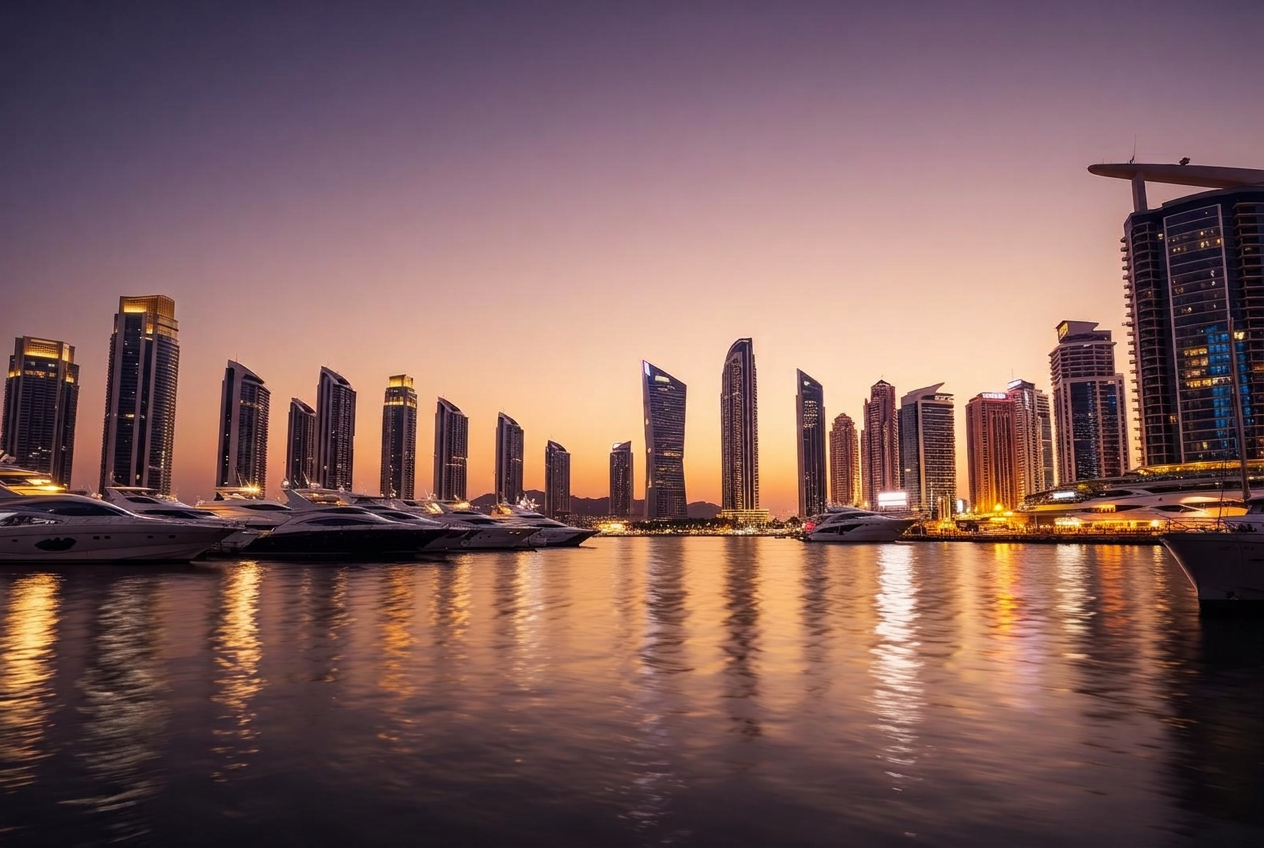
AI-generated image for illustrative purposes.
The coast that came first
Before Palm Jumeirah existed and before Downtown was drawn, Dubai's luxury hotels were on this shoreline. The Jumeirah coast is the stretch of beachfront running south-west from the older city towards the Marina, and it remains the part of Dubai where the resort industry is most mature.
Maturity shows in specific ways. The landscaping is grown in rather than newly planted. The service teams are long-established. The beaches are wide and, crucially, they face the open Gulf rather than an artificial lagoon. And the district behind them is a real one — low-rise residential, with shops, clinics and schools rather than showrooms.
It is also the best-positioned coastal option for anyone who wants both beach and city. The drive to Downtown from most of this shoreline is materially shorter than from the Palm, which changes what a day is capable of containing.
How the shoreline is arranged
Think of it in three stretches. At the northern end, closer to the older city, sit Jumeira Bay — a small artificial island off the coast — and the newer coastal resorts, with the shortest drives into Downtown and DIFC.
The middle is the landmark stretch: the Burj Al Arab, its neighbouring Jumeirah properties, and the Madinat Jumeirah complex behind them. This is the densest concentration of resort infrastructure on the coast and the one with the most to do without leaving.
The southern end runs towards the Marina and JBR, where the character shifts from resort to high-rise urban beachfront — busier, younger, better value, and less obviously luxury.
Where you sit on that spectrum determines your holiday far more than the brand does.
Jumeirah Burj Al Arab: the landmark as a hotel
The building needs no introduction and the hotel is frequently misunderstood. It is an all-suite property on its own artificial island, reached by a private causeway, and it operates at a level of formality and ceremony that most modern luxury hotels have abandoned.
That is the thing to weigh. Guests who want a hotel that performs — arrival ritual, gold, spectacle, a dining programme built around the address — will find nowhere else like it. Guests whose idea of luxury is understatement will find it a great deal.
It is also worth understanding as a piece of history: the building that gave Dubai its international image, still trading on the strength of a silhouette designed a quarter of a century ago. Whatever else it is, it is not generic.
Jumeirah Al Naseem: the coast's most balanced option
Al Naseem sits within the same Jumeirah cluster and takes a lighter approach: contemporary, beach-facing, and connected to the wider Madinat Jumeirah resort complex with its waterways, souk and extensive dining spread.
That connection is the practical argument for it. A guest here has one of the coast's widest beaches in front of them and a large, walkable resort estate behind them — enough restaurants, bars and facilities to fill several days without a taxi.
It works well for families, for couples who want a beach base with variety, and for travellers who intend to make a few trips into the city. It is not the choice for anyone seeking seclusion; the complex is busy by design.
Four Seasons Resort Dubai at Jumeirah Beach: the city resort
The Four Seasons resort occupies a stretch of beachfront closer to the older city, and its distinguishing quality is proximity. It is a full beach resort — private sand, pools, spa, a substantial dining line-up — positioned near enough to Downtown and DIFC that a city dinner is a short drive rather than an expedition.
It suits the traveller running a mixed trip: mornings on the beach, meetings or museums in the afternoon, dinner in the city. That combination is difficult to execute from the Palm and straightforward from here.
It also suits families who want resort facilities without the theme-park scale of the largest Palm properties.
Jumeirah Marsa Al Arab: the newest flagship
Jumeirah Marsa Al Arab, which the group announced would welcome guests from April 2025, is the coast's most recent significant addition and the operator's newest flagship. The positioning leans on a yacht-influenced form and a marina setting rather than a single iconic silhouette.
As the newest of the coastal luxury properties, its facilities and finishes are contemporary in a way the older neighbours' are not, and its dining and wellness programmes were designed against current expectations rather than retrofitted to them.
Because it is recent, this is a property where checking the hotel's own current pages before booking matters more than usual — programme details at new hotels settle over the first couple of years.
Bvlgari Resort Dubai: the island exception
The Bvlgari resort sits on Jumeira Bay, a small artificial island connected to the coast by a causeway, and it is the least Dubai-like luxury hotel in Dubai. Designed by the Milanese practice ACPV — Antonio Citterio Patricia Viel — it is low-rise, Mediterranean in vocabulary, organised around a marina, and deliberately quiet.
The spa here is one of the coast's most substantial, and the resort's dining has been built around Italian kitchens rather than an international spread. The whole property is oriented towards guests who want to be somewhere rather than to see something.
It suits couples, longer stays and repeat visitors. It is a poor choice for a first trip built around sightseeing, and for families who need constant activity.
What the coast gives you that the Palm does not
Access, first. Most of this shoreline is twenty minutes or so from Downtown depending on traffic, against a materially longer run from the Palm's crescent — which over a week is hours of your holiday returned to you.
Second, open sea. These beaches face the Gulf rather than an inner lagoon: better swimming, real waves on windy days, and sunsets over water rather than over buildings.
Third, a real neighbourhood behind the resorts, with independent cafés, beach access points and the ordinary texture of a city, which the Palm's crescent lacks entirely.
What the Palm gives in return is the skyline view and the scale of its resorts. Choose accordingly.
Practical notes
There is no metro on this shoreline. Plan on taxis, ride-hailing and hotel shuttles, and ask at booking whether your property runs scheduled services — several do.
Beach orientation is west-facing along most of the coast, which means direct afternoon sun and sunset over the water. Wonderful from November to March; a factor to plan around from May onwards.
Day access to hotel beaches for non-residents exists at several properties, is capacity-controlled, and varies by season. Enquire directly and ask whether pool and beach are both included.
Rates here follow the same seasonal curve as the rest of the city, with the additional wrinkle that the landmark properties price on demand for the building rather than the room. Anything time-sensitive is worth confirming with the hotel close to travel.
The Dubai Hotels Magazine view
The Jumeirah coast is the best compromise in Dubai, and compromise is not a criticism here. It offers a genuine beach holiday without severing you from the city, in a district that has had twenty-five years to work out how to do this.
Take the landmark if you want ceremony, the Jumeirah cluster if you want variety, the Four Seasons if you want the city within reach, the newest flagship if you want contemporary, and the island resort if you want quiet. All five are answering different questions well.
Sources
Factual detail in this article was checked against first-party and authoritative sources on . Times, prices, opening hours and menus change — confirm current details with the provider before travelling.
- https://www.jumeirah.com/en/stay/dubai/jumeirah-burj-al-arab-a-jumeirah-icon
- https://www.jumeirah.com/en/stay/dubai/jumeirah-al-naseem
- https://mediahub.jumeirah.com/jumeirah-marsa-al-arab-set-to-welcome-guests-from-april-2025
- https://acpvarchitects.com/project/bulgari-resort-dubai/
- https://www.bulgarihotels.com/en_US/dubai/spa-and-fitness/the-bulgari-spa
- https://www.fourseasons.com/dubai/
- https://www.visitdubai.com/en/plan-your-trip/practical-information
About the author
The Editorial Team — Reporting, reviews and guides produced by the Dubai Hotels Magazine editorial team.
Our authorsHotels in this article
Where to stay
JumeirahLuxury
Closed for restoration
Jumeirah Burj Al Arab
198 duplex suites on a man-made island 280 metres offshore — the sail-shaped silhouette that fixed Dubai in the global imagination.
- Beach
- Fine Dining
- Spa
JumeirahResort
Jumeirah Al Naseem
435 rooms and suites facing Jumeirah Burj Al Arab, with eight restaurants and bars, Talise Spa and the resort's turtle rehabilitation project.
- Beach
- Spa
- Family
JumeirahLuxury
Four Seasons Resort Dubai at Jumeirah Beach
237 rooms and suites across a 14-acre low-rise beachfront site — the most garden-like of Dubai's city-side resorts.
- Beach
- Spa
- Fine Dining
JumeirahLuxury
Jumeirah Marsa Al Arab
Jumeirah's newest Dubai resort, a ship-form building by Shaun Killa on the water beside Madinat Jumeirah.
- Beach
- Fine Dining
- Spa
Jumeira BayLuxury
Bvlgari Resort Dubai
Antonio Citterio Patricia Viel's seahorse-shaped island resort: balconied rooms from 53 sqm, standalone villas and a private marina.
- Beach
- Fine Dining
- Spa
Destinations
Explore the destinations
Read next
More from the magazine
ExperienceBeach Clubs
Dubai Beach Clubs: What Travellers Should Know
Minimum spends, sun angles, wind, season and the family policies nobody publishes. A practical guide to a category that ranges from excellent to expensively disappointing.
By The Editorial Team
FeaturesDesign
Reading Dubai: Twenty-Five Years of Hotel Architecture
A city that built its identity out of hotels. From a sail on an artificial island to a building suspended across a motorway — the chronology, and what each phase was arguing for.
By The Editorial Team
AI-generated image for illustrative purposes.
GuidesWhere To Stay
A Guide to Staying on Palm Jumeirah
Trunk, frond or crescent — the three answers to the same question, and why the part of the island you book matters more than the brand above the door.
By The Editorial Team